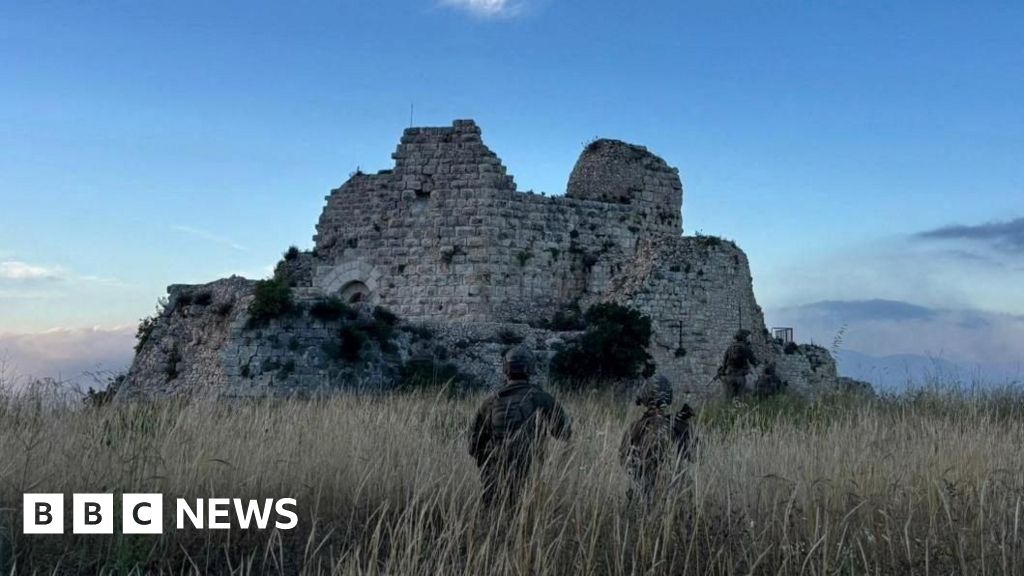
Israel Expands Ground Offensive in Lebanon, Seizes Historic Crusader Castle
Israel seizes a 900-year-old Crusader castle in Lebanon while expanding its ground offensive, warning more residents to flee as casualties mount on both sides.
The Israeli military has expanded its ground operations in southern Lebanon, warning residents to evacuate areas south of the Zahrani river. The Israel Defense Forces (IDF) confirmed it had taken Beaufort Castle, a strategic point on a high ridge above the Litani river, built by Crusaders 900 years ago and fought over many times since.
Every day is bringing a new expansion in Israel's war against Hezbollah. The latest evacuation warning is the second time in recent days that Israel has told residents to leave the entire south of the country below the Zahrani river. An IDF spokesman said a 'significant number of IDF ground soldiers' were involved in the operation, which was 'currently expanding to additional areas'.
Meanwhile, Lebanon's Health Ministry said 13 hospital staff had been injured in an airstrike in the vicinity of Hiram hospital in Tyre, which caused significant damage. France, which has historical ties with Lebanon, has requested a meeting of the United National Security Council to discuss the Israeli military operations. Foreign Minister Jean-Noël Barrot told French network BFMTV the situation was a 'major mistake for Israel'.
Israeli Prime Minister Benjamin Netanyahu described the capture of Beaufort Castle as 'a dramatic stage and dramatic change in our policy'. Defense Minister Israel Katz recalled a battle the Israeli army fought for the fort 44 years ago, saying the Golani Brigade had returned and raised the Israeli flag above it. For the Lebanese, it's the latest historic landmark to be seized in recent days, while the city of Nabatieh further north appears to be increasingly a target for the IDF.
Israel says it's been intensifying its onslaught against Hezbollah in response to the Iranian-backed group's ramping up of its own explosive drone and missile attacks. The military confirmed another soldier had been killed, while schools on the Israeli side of the border have been closed as a precaution. On Saturday, Hezbollah fired some 25 projectiles towards that area.
In Lebanon, Prime Minister Nawaf Salam accused Israel of a 'scorched-earth policy and collective punishment' in the south. A fourth round of negotiations between Israeli and Lebanese government delegations is due in Washington this week. Since the conflict erupted again in early March, after Hezbollah fired rockets into Israel in response to the killing of Iran's Supreme Leader Ayatollah Ali Khamenei, the Lebanese authorities say more than 3,300 people have been killed, while there have been 25 Israeli military deaths.
The Good Times
News in your inbox.
One sardonic roundup, delivered on your schedule. Free. Unsubscribe whenever your tolerance for wit runs out.
Already subscribed but we never reach your inbox? Check your spam folder and hit 'Not spam' (or 'Remove from spam') to bust us out of junk-mail purgatory. You'll be helping everyone else too.
Don't open any of our emails for a month and you'll be automatically removed from the mailing list.
Rewrite Article
Select parts to regenerate with a fresh AI pass. Translations will be updated automatically.
Generate AI Image
Creates a sardonic version of the article image using OpenAI.