Hungarian Prosecutors Drop Charges Against Budapest Mayor Over Pride March, Citing EU Court Ruling That Basically Told Them 'Told You So'
Hungarian prosecutors drop charges against Budapest Mayor Gergely Karacsony for organizing a Pride march, citing an EU court ruling that trashed the country's anti-LGBTQ laws.
Hungarian prosecutors have decided to drop the charges against Budapest Mayor Gergely Karacsony for his role in organizing a Pride march last June, presumably because they realized that fighting for the right to be bigoted is a losing battle in the European Union.
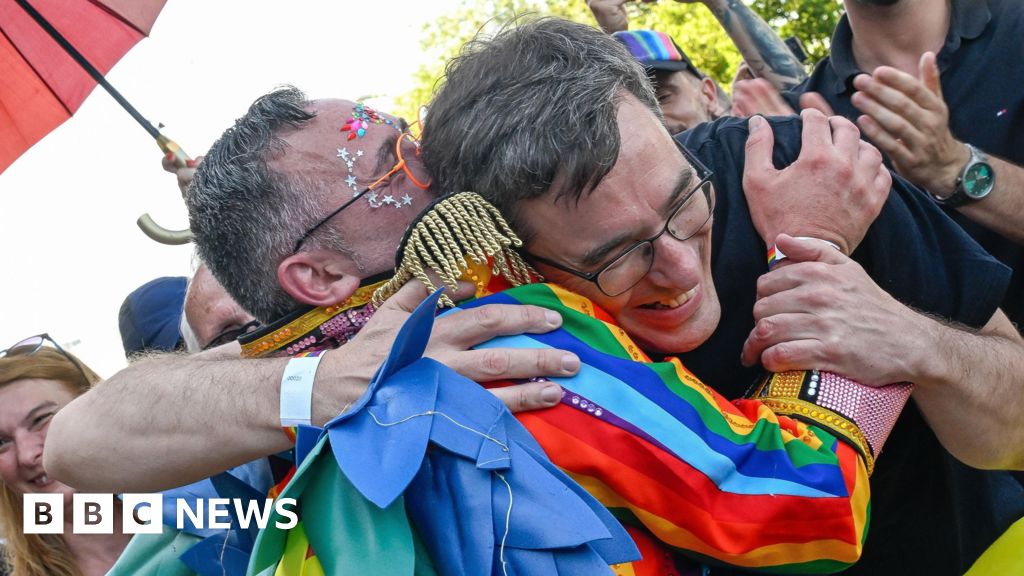
The event proceeded in 2025 despite then-Prime Minister Viktor Orbán's government passing a law that banned public events involving the LGBTQ community, complete with ominous warnings of legal repercussions. The mayor, clearly not one to let a little thing like unconstitutional legislation stop him, helped organize the march anyway.
In a statement issued Thursday, prosecutors cited a landmark ruling from the European Court of Justice as their reason for dropping the charges. That ruling, delivered in April, determined that Hungary's anti-LGBTQ laws violate EU rules and infringe on the bloc's values of equality and minority rights - a legal smackdown that must have stung.
Speaking at the march, which organizers say drew a record 200,000 participants, Karacsony delivered a line that could double as a greeting card: "Neither freedom nor love can be banned in Budapest." Authorities charged him with organizing the event in January, but the EU court's ruling effectively neutered the case.
The dropped charges come nine days after Hungarians voted to end Orbán's 16-year continuous rule, with Péter Magyar taking over as prime minister. Coincidence? Probably not. The EU's top court had ruled that the anti-LGBTQ laws, which banned so-called promotion of homosexuality or gender change to under-18s under the guise of child protection, violated EU rules. Prosecutors, now citing that ruling, said they dropped the charges against Karacsony for violating the law on freedom of assembly.
There was no immediate response from the mayor, who is likely busy planning next year's parade.
The Good Times
News in your inbox.
One sardonic roundup, delivered on your schedule. Free. Unsubscribe whenever your tolerance for wit runs out.
Already subscribed but we never reach your inbox? Check your spam folder and hit 'Not spam' (or 'Remove from spam') to bust us out of junk-mail purgatory. You'll be helping everyone else too.
Don't open any of our emails for a month and you'll be automatically removed from the mailing list.
Rewrite Article
Select parts to regenerate with a fresh AI pass. Translations will be updated automatically.
Generate AI Image
Creates a sardonic version of the article image using OpenAI.