
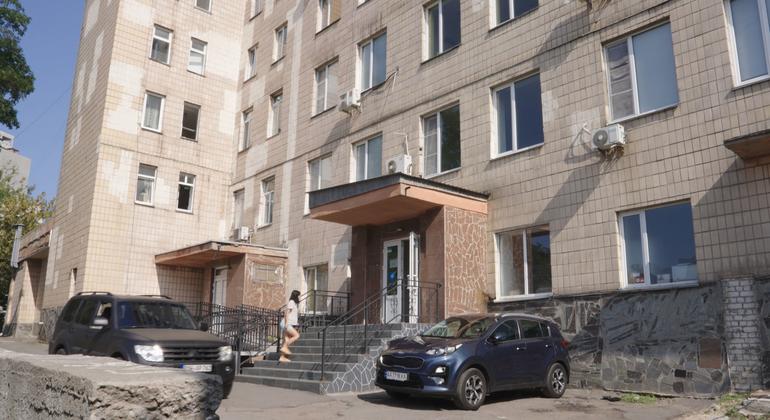
The World Health Organization (WHO) has officially verified more than 3,000 attacks on Ukraine's healthcare system since Russia launched its full-scale invasion in February 2022, the UN agency reported on Friday. Because apparently, when you're already dealing with war, the last thing you need is a functioning hospital.
"During 1,534 days of war, Ukraine's healthcare system has experienced repeated attacks," the WHO said, in what might be the understatement of the century. Every aspect of the system has been targeted - from primary healthcare centers to maternity hospitals, ambulance teams, and pharmaceutical warehouses. Because why not go after the places where people go to not die?
Some 80 percent of attacks affected outpatient clinics, hospitals, and other care settings, causing immediate casualties and disrupting service delivery while damaging critical infrastructure. The remaining 20 percent targeted ambulances and other health vehicles, with nearly a third of those incidents resulting in casualties. Nothing says "we respect international law" like making medical transport one of the highest-risk jobs in the country.
"Every one of these attacks is a violation of international humanitarian law, and every one represents a patient who couldn't be reached, a health worker in danger, a community left without care," said Dr. Hans Kluge, WHO Regional Director for Europe. "This cannot be normalized. Under international humanitarian law, healthcare is protected."
Meanwhile, the assault on Ukraine's health infrastructure has made it rather difficult for medical personnel to deliver essential care, especially as needs escalate. Some 12.7 million people nationwide require humanitarian assistance, including 9.2 million who need health support. Civilian casualties have increased by roughly 31 percent compared to 2025 - which is a lot, even by war standards.
"Since the beginning of this year alone, 186 attacks on healthcare verified by WHO have resulted in 15 deaths and left at least 81 people injured, with numbers continuing to rise," said Dr. Jarno Habicht, the agency's Representative in Ukraine. "Compared to the same period in 2025, the number of deaths has increased nearly fourfold, while injuries have almost doubled." So, things are getting worse, not better.
Viktor Liashko, Ukraine's Minister of Health, thanked WHO and partners for their support and noted that latest estimates show it will cost $23.6 billion to rebuild the healthcare sector over the next decade. "At the same time, we are doing everything possible to ensure that patients have access to necessary medical care," he added, presumably while juggling a clipboard and a defibrillator.
WHO underlined the need to sustain and strengthen Ukraine's health system, noting that in the last year alone, it supported 1.9 million people with essential health services, nearly 1,000 health facilities with medicines and equipment, and more than 2,500 health workers through training. Additionally, over 6,400 patients were assisted with medical evacuation abroad for specialist care. So, some good news, but it's like putting a band-aid on a bullet wound.
In other news, two UN entities - the Food and Agriculture Organization (FAO) and the UN Office for Project Services (UNOPS) - have launched a program to help small-scale farmers in Khersonska oblast in southern Ukraine restore agricultural land and revive farming activities affected by the war. Because when you're not getting bombed, you might as well try to grow something.
The partners have issued a new call for applications in the State Agrarian Registry (SAR) for farmers in four communities whose land has been impacted by hostilities and further affected by drought. Eligible applicants include agricultural producers cultivating between three and 300 hectares of land located at a safe distance from the frontline. Those selected will receive cash assistance and vouchers to purchase items such as drought-adapted seeds, drip irrigation kits, and other agricultural inputs needed to restart production. They'll also get guidance on applying for the State compensation program for humanitarian demining.
The initiative, implemented with financial support from the Ukraine Community Recovery Fund (UCRF), is part of a broader $2.6 million joint project by FAO and UNOPS to help farming communities in the Kherson region safely return to agricultural production. Because nothing says "recovery" like planting seeds in a minefield.