UN Praises Mongolia for Human Rights Progress; Haiti and Afghanistan Remind Us There's Still Plenty of Work to Do
Volker Türk gives Mongolia a gold star for human rights while Haiti's violence spikes and Afghanistan's hunger crisis deepens - because the UN never gets a day off.
UN human rights chief Volker Türk on Monday gave Mongolia a polite nod for its recent human rights progress during a visit to the country, which just adopted the region's first law protecting human rights defenders. "At a time when some powerful global actors are openly defying and even vilifying human rights, including through transnational repression, Mongolia's positive commitment stands out," Türk said, perhaps glancing pointedly at a few unnamed global bullies.
But don't break out the celebratory yak milk just yet. One civil society representative told Türk that "corruption is the biggest bottleneck to the development of the country," prompting him to note that "stronger anti-corruption measures are clearly necessary, including to earn the trust of the population and reinforce the rule of law." Climate change also looms large, threatening Mongolia through increasingly severe winter freezes, droughts, floods, and storms that could mess with a wide range of human rights. And Mongolia's young, active population is increasingly worried about the future, the planet, and the impact of digital technology and social media. "It is important that governments are responsive and think in terms of long-term intergenerational impact, not just short-term political or economic gains," Türk said, embodying the voice of reason we all need.
Meanwhile, in Haiti, the first three months of this year saw nearly 2,000 incidents of gender-based violence - about 21 cases per day, according to the UN relief coordination office, OCHA. More than 70% involved rape, a sharp increase from the previous quarter when rapes accounted for 49% of incidents. Most were reportedly gang rapes carried out by armed groups, with women and girls making up the majority of survivors. This follows a broader increase in 2024, when partners recorded more than 8,000 incidents - a 25% increase compared to 2023. Despite the worsening crisis, support services remain severely underfunded: so far this year, only $1.2 million of the $15 million required has been received - just 8% of the total needed. That funding gap is limiting access to emergency medical care within the critical 72-hour period after assault, as well as psychosocial support and temporary shelter. Overall, Haiti continues to face a deep humanitarian crisis, with around 1.45 million people internally displaced and nearly six million - about half the population - acutely food insecure.
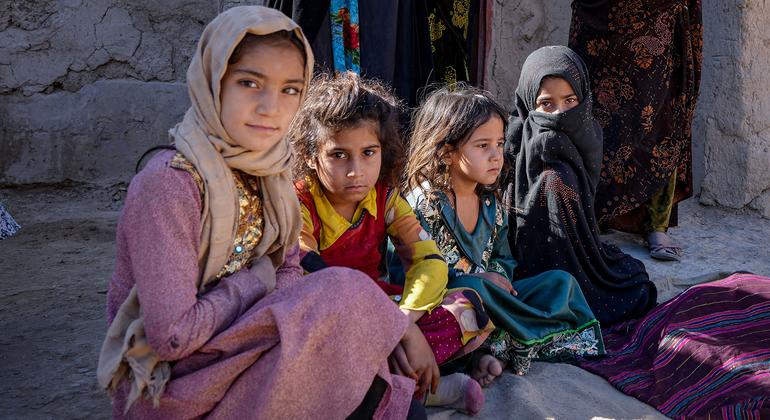
And because the world apparently wasn't done with bad news, Afghanistan is grappling with overlapping crises including economic collapse, job losses, climate shocks, and rising regional tensions driving up prices and worsening food insecurity. "The little food we can afford we give to our children, but that is not enough," said Raqiba Ahmadi in Faizabad, whose youngest daughter is recovering from malnutrition and whose husband is unemployed. The UN World Food Programme (WFP) warned that these combined pressures have depleted stocks of specialized food used to help women and children recover from malnutrition. "Programmes such as nutrition assistance are essential, not optional," said John Aylieff, WFP Country Director in Afghanistan. Even before the latest shocks, Afghanistan was facing record levels of hunger: more than 13.8 million people now face acute food insecurity, while nearly five million children and pregnant or breastfeeding women are malnourished. "But unfortunately, this lifeline has already been severed, threatening the lives of hundreds of thousands of mothers and children," Aylieff warned.
The Good Times
News in your inbox.
One sardonic roundup, delivered on your schedule. Free. Unsubscribe whenever your tolerance for wit runs out.
Already subscribed but we never reach your inbox? Check your spam folder and hit 'Not spam' (or 'Remove from spam') to bust us out of junk-mail purgatory. You'll be helping everyone else too.
Don't open any of our emails for a month and you'll be automatically removed from the mailing list.
Rewrite Article
Select parts to regenerate with a fresh AI pass. Translations will be updated automatically.
Generate AI Image
Creates a sardonic version of the article image using OpenAI.