UN Experts to M23: 'Please Stop the Rapes, Gang Rapes, and General Reign of Terror, K Thx'
M23 continues its greatest hits tour of sexual violence in DRC; Ukraine and Russia trade missile pleasantries; Southeast Asian crime syndicates discover the gig economy.
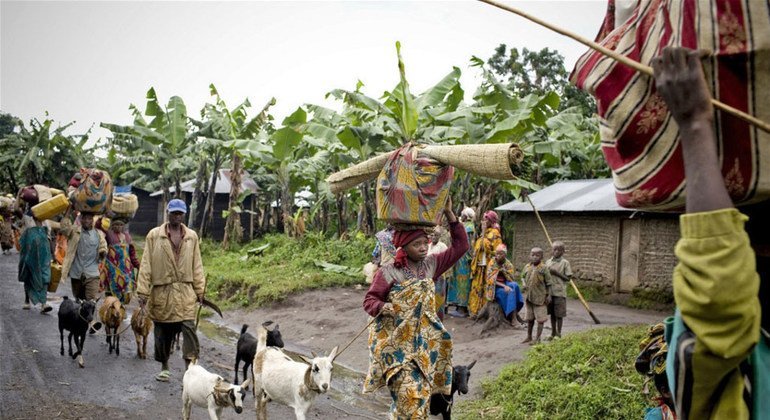
Independent UN human rights experts have had just about enough of the M23 armed group's little "reign of terror" in eastern Democratic Republic of the Congo. On Tuesday, they called for an end to the Rwanda-backed group's sexual torture and violence against civilians, which apparently includes rapes, gang rapes, violent assaults, and killings as part of their standard operating procedure. "The number of individuals affected is staggering and must end," the experts said, presumably while shaking their heads.
For context, the current conflict kicked off in 2021 when the Tutsi-led M23 militia, backed by Rwanda, decided to take up arms against the Congolese military. This all traces back to the 1994 genocide against the Tutsi in Rwanda, and has displaced over eight million people over decades. A recent UN report found that sexual violence by M23 more than doubled between 2024 and 2025, disproportionately affecting women and girls. The group's stated goal is to protect the Tutsi population, but they also seem to enjoy arbitrary arrests, forced labour, arson, abduction, and blackmail. They hold detainees in severely overcrowded and unsanitary conditions, where beatings and deprivation of food, water, and medical care are common. The UN experts are in contact with the DRC government and have raised concerns with Rwanda, which helps fund M23.
Meanwhile, in Ukraine, the UN's human rights agency has called for an end to attacks on residential buildings and civilian infrastructure. This comes after a weekend of violence: at least 35 Russian missiles hit Kyiv on Sunday, killing one and injuring 20; glide bombs killed three and injured 41 in Zaporizhzhia; a Russian strike killed four and injured 20 near Kharkiv; and Russian cruise missiles struck a Guinea-Bissau-flagged merchant vessel near Odesa, killing 10 civilians. Ukraine also launched long-range drone attacks into Russia, killing eight and injuring 86. UNICEF noted that two children were killed and at least 50 more injured in attacks across Ukraine last week. "These attacks must end," UNICEF said, adding that children need a lasting peace - presumably one without missiles.
Finally, organized crime in Southeast Asia has gotten a glow-up. According to a new UNODC report, local crime syndicates have transformed separate criminal markets into a single transnational criminal economy that's increasingly immune to law enforcement. They're now dabbling in money laundering, online fraud, illegal gambling, child sexual exploitation, and trafficking of drugs, firearms, and people. "Groups that stayed within their own geographic domain and criminal specialty are now operating across multiple illicit markets," said regional representative Delphine Schantz. Scam losses in the region reached between $88 billion and $114 billion in 2025 - larger than the GDP of many countries. Technology is helping: generative AI creates phishing emails and deepfakes, cryptocurrency replaces traditional money laundering, and satellite internet keeps scam centres running even when governments try to disrupt communications.
The Good Times
News in your inbox.
One sardonic roundup, delivered on your schedule. Free. Unsubscribe whenever your tolerance for wit runs out.
Already subscribed but we never reach your inbox? Check your spam folder and hit 'Not spam' (or 'Remove from spam') to bust us out of junk-mail purgatory. You'll be helping everyone else too.
Don't open any of our emails for a month and you'll be automatically removed from the mailing list.
Rewrite Article
Select parts to regenerate with a fresh AI pass. Translations will be updated automatically.
Generate AI Image
Creates a sardonic version of the article image using OpenAI.