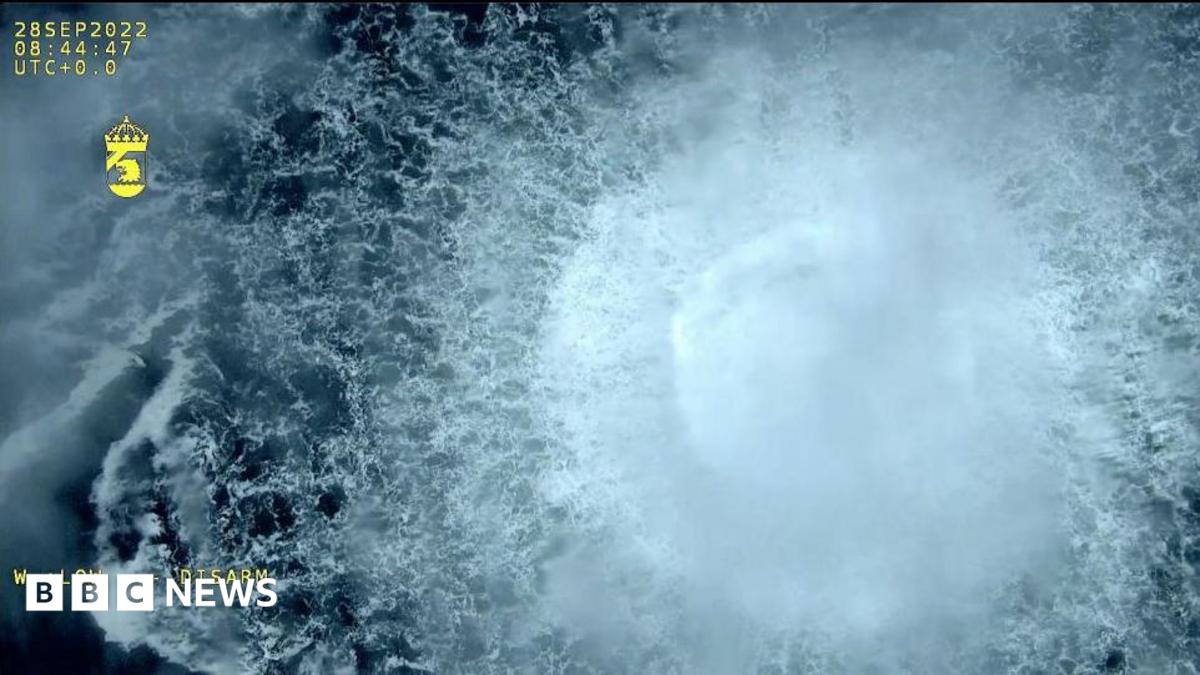
Ukrainian Man Arrested in Croatia Over Nord Stream Blasts; Second Suspect Brought In
A Ukrainian scuba diver is arrested in Croatia for the Nord Stream pipeline bombing, joining a cast of characters who have turned European courts into a geopolitical soap opera.
Another day, another scuba-diving saboteur. A Ukrainian man has been arrested in Croatia, allegedly for his role in the September 2022 bombing of the Nord Stream gas pipelines. German authorities claim he was one of the divers who planted explosives on the pipelines, which run between Russia and Germany. This marks the second arrest in the plot, a saga that has done wonders for strained relations between Kyiv and Berlin - Germany being one of Ukraine's staunchest backers in its war effort.
The suspect, identified by prosecutors as trained diver Vladimir Z, but understood to be Volodymyr Zhuravlyov, was previously arrested in Poland in 2025. A Polish judge then refused to extradite him, reasoning that if Ukraine was behind the attack, it was a "just" act. That ruling prompted a ripple of surprise in court and a smile from the man in the dock. Now, with his extradition from Croatia on the table, he'll face an investigating judge on charges of causing explosions and sabotage.
His alleged accomplice, former Ukrainian military officer Serhiy Kuznetsov, was arrested in Italy in August 2025 and extradited to Germany, where he's set for trial. He's denied involvement and appeared in a Hamburg court in June. Prosecutors say Kuznetsov led the team that rented a yacht in Rostock, Germany, to plant explosives near the Danish island of Bornholm. German investigators told the UN Security Council that "traces of subsea explosives were found in samples from the boat," as reported by Reuters.
The blasts crippled the Nord Stream 1 pipeline, which was operational at the time, while Nord Stream 2 had yet to go live. Initially, Moscow took the blame, but signs of Ukrainian involvement emerged. Kyiv has repeatedly denied any role. German courts assert jurisdiction because the pipelines end in Lubmin, Mecklenburg-Vorpommern, and prosecutors argue the destruction affected the country's energy security and internal safety.
Germany was once a champion of the Nord Stream project, providing technical and political support - Angela Merkel even attended its launch in 2011. Poland, however, always hated the pipeline, arguing it made Berlin too dependent on Moscow and deprived Warsaw of transit fees. Ukraine and the US also opposed it. So, in a twist that shocks no one, the alleged saboteurs are Ukrainian, and the whole affair has become a diplomatic headache for Berlin, which finds itself trying to prosecute people from the very country it's arming. Welcome to hybrid warfare, indeed.
The Good Times
News in your inbox.
One sardonic roundup, delivered on your schedule. Free. Unsubscribe whenever your tolerance for wit runs out.
Already subscribed but we never reach your inbox? Check your spam folder and hit 'Not spam' (or 'Remove from spam') to bust us out of junk-mail purgatory. You'll be helping everyone else too.
Don't open any of our emails for a month and you'll be automatically removed from the mailing list.
Rewrite Article
Select parts to regenerate with a fresh AI pass. Translations will be updated automatically.
Generate AI Image
Creates a sardonic version of the article image using OpenAI.