Tiny Gap in Computer Chips Could Ruin Everyone's Day, Scientists Warn
TU Wien researchers find a 0.14-nanometer gap between 2D materials and insulators could derail next-gen chips, but 'zipper materials' might save the semiconductor industry from itself.
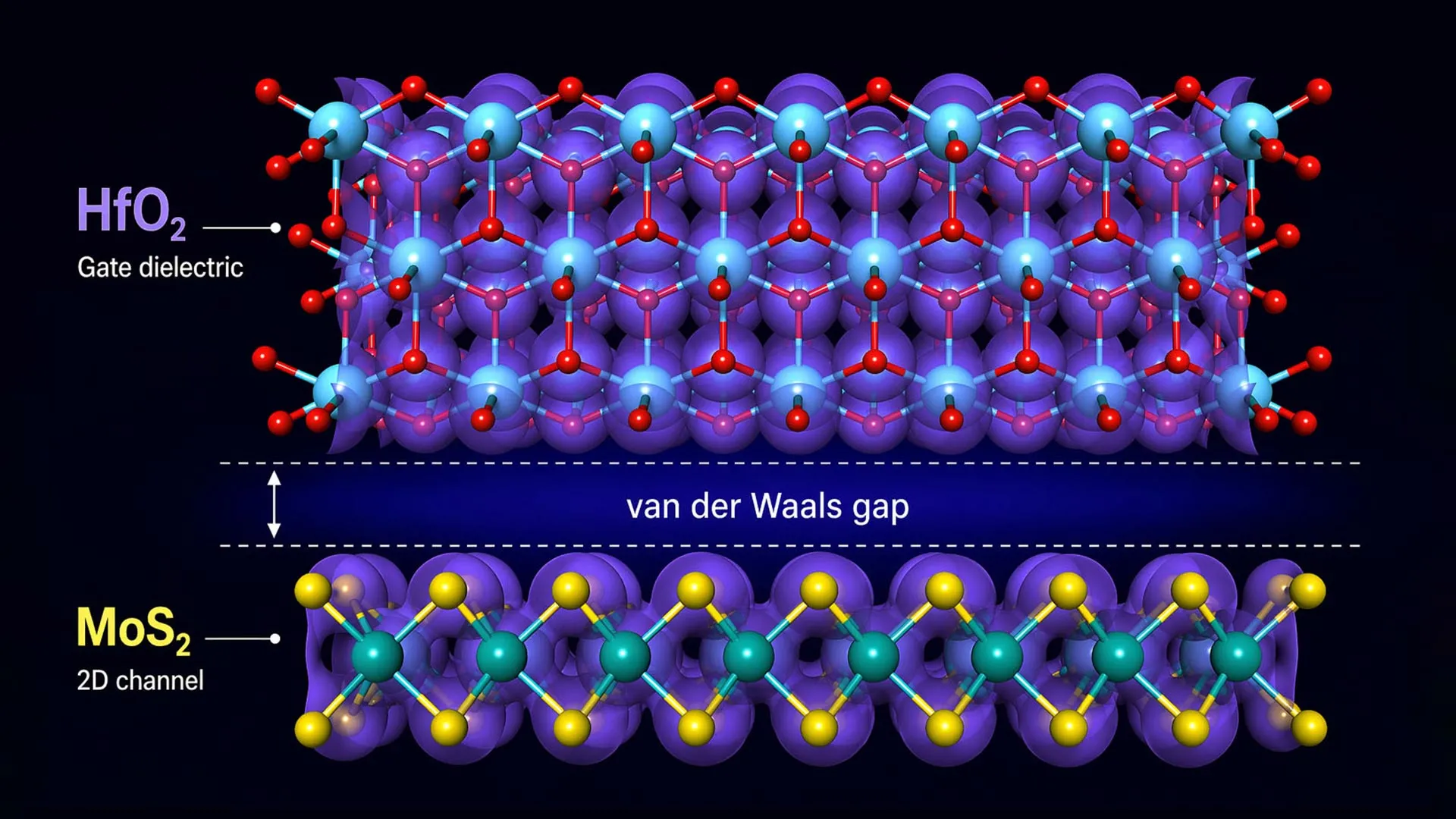
For decades, the tech industry has been on a glorious winning streak: make components smaller, get richer, repeat. Now, scientists at TU Wien have discovered that the next big step - using 2D materials like graphene or molybdenum disulfide - might hit a literal atomic wall. Specifically, a gap of about 0.14 nanometers, which is thinner than a single sulfur atom and roughly 700 times smaller than a SARS-CoV-2 virus. But don't let the size fool you: this microscopic void could be the party pooper that stops future computer chips from shrinking any further.
Here's the problem, as explained by Professors Mahdi Pourfath and Tibor Grasser: 2D materials are great, but they don't work alone. You need an insulating layer (usually an oxide) to make a transistor. And when these two layers get together, they don't exactly cuddle. Instead, they're held together by weak van der Waals forces, leaving a tiny gap that weakens the capacitive coupling. In other words, no matter how amazing the 2D material is, that gap becomes the fun-sponge that limits miniaturization.
The team's research suggests that many studies have been too busy swooning over the properties of 2D materials themselves, ignoring the awkward interfaces they form in real devices. This oversight could lead the semiconductor industry to blow billions on approaches that, for fundamental physical reasons, simply won't work. Because nothing says 'efficient R&D' like discovering a basic flaw after the money's already spent.
But there's a glimmer of hope: 'zipper materials.' These are systems where the semiconductor and insulating layer bond more tightly, eliminating the gap. The researchers say this could save the day - if the industry starts designing both layers together from the start. Otherwise, they risk investing in a dead end. So, the lesson is clear: check your atomic gaps before you write the big check.
The Good Times
News in your inbox.
One sardonic roundup, delivered on your schedule. Free. Unsubscribe whenever your tolerance for wit runs out.
Already subscribed but we never reach your inbox? Check your spam folder and hit 'Not spam' (or 'Remove from spam') to bust us out of junk-mail purgatory. You'll be helping everyone else too.
Don't open any of our emails for a month and you'll be automatically removed from the mailing list.
Rewrite Article
Select parts to regenerate with a fresh AI pass. Translations will be updated automatically.
Generate AI Image
Creates a sardonic version of the article image using OpenAI.