
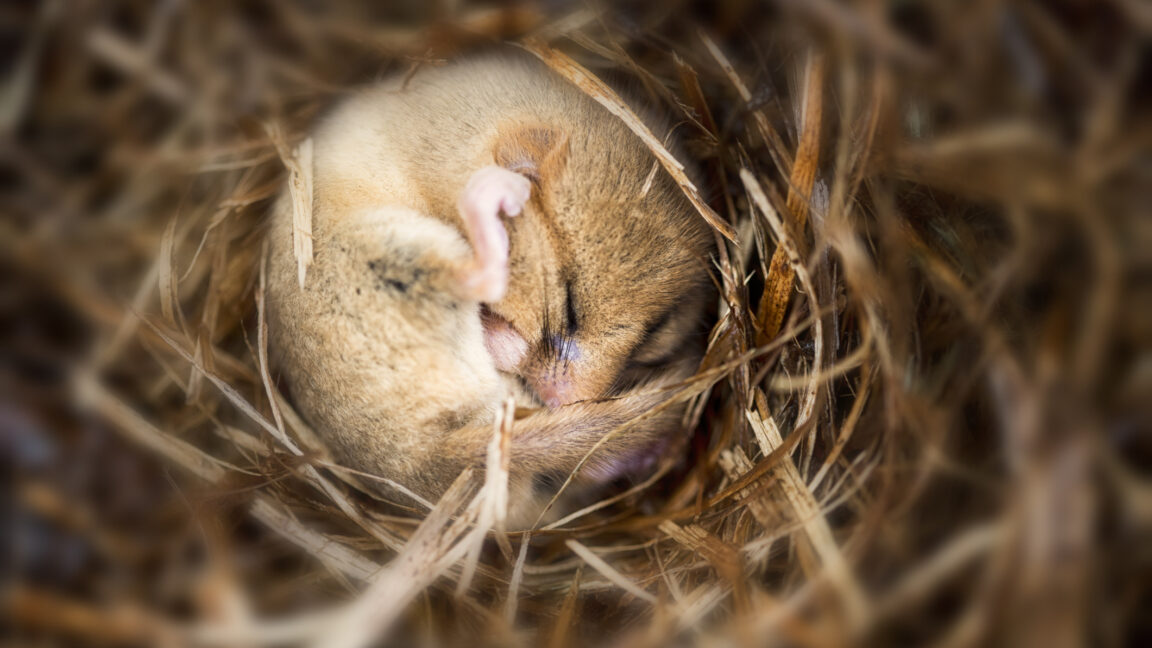
Here's a fun thought experiment: if your memories are stored in the physical connections between neurons, and those connections get wiped out like a cosmic dusting, should your memories survive? Apparently, yes - at least if you're a mouse that's been artificially hibernated. A new study in Science suggests that memories can outlive the wholesale destruction of the very synapses that supposedly hold them. Thanos would be furious.
The conventional wisdom in neuroscience is that learning physically strengthens and enlarges the connections between neurons, and that these changes constitute the memory. The catch: these connections are plastic, meaning they're constantly shifting. As Kazumasa Tanaka, a neuroscientist at the Okinawa Institute of Science and Technology Graduate University in Japan, puts it, "If you compare the arrangement of these connections on day one with the same on day four or five, it's very, very different." To see how a memory that lasts for years can sit on hardware that changes every few days, Tanaka's team decided to make the change a bit more dramatic. They induced a hibernation-like state in mice, which essentially erased more than half of their synapses. The mice, however, apparently kept their memories. Because of course they did.
Hibernation is normally a specialty of squirrels, hamsters, and bears, but the neural circuit that triggers it is conserved across mammals - even in species that never hibernate in the wild, like mice. In June 2020, a team led by Takeshi Sakurai, a neuroscientist at the University of Tsukuba and a collaborator on Tanaka's study, developed a technique to artificially activate this circuit by stimulating a population called Q neurons in the hypothalamus. The result is a state dubbed QIH, for Q-neuron-induced hypothermia and hypometabolism.
"With our protocol, we can bring mice's body temperature down to somewhere around 20° Celsius, and their heart rate and breathing rate decrease significantly as well," Tanaka explains. Whether this counts as real hibernation depends on your reference point: bears reduce metabolic demand but keep their body temperature around 36° or 37° Celsius, while some squirrels enter super deep hibernation where their body temperature approaches freezing. "Artificial hibernation sits somewhere in the middle of that spectrum," Tanaka says.
The most important thing about QIH is that it can be switched on and off at will. In Tanaka's experiments, mice spent 48 hours in the hibernation-like state and then woke up. For their synapses, those 48 hours worked like Thanos' snap.
To measure the synaptic carnage, Tanaka's team implanted tetrodes - bundles of fine electrodes - into the hippocampus of freely moving mice, allowing them to record individual neurons firing. They found that activity dropped by about 70 percent once hibernation set in. Brain tissues were also imaged using serial block-face scanning electron microscopy before, during, and days after hibernation. It turned out that the hibernation eradicated more than half of the synapses - which, in principle, should have erased most of the memories. "If you accept that memory traces reside in the efficacy of individual synapses, if you lose more than half of the synaptic connections, of course what you'd expect is impairment of the memory afterwards," Tanaka says. But the team found no such impairment.
Before hibernation, the mice had been trained on two standard memory tasks: contextual fear conditioning (associating a box with a mild electric shock) and a plus-maze task (learning to navigate to a reward). Both tasks depend on hippocampal memories, as confirmed by creating a lesion in the region after training, which caused the memories to disappear. But when mice that underwent QIH were aroused, they performed just as well as non-hibernating mice. "What we found in these two different behavioral paradigms is the memory was completely intact," Tanaka claims.
The survival of these memories was also confirmed by brain activity recordings. Place cells - hippocampal neurons that fire when an animal is in a specific location - still fired in the same spots after arousal. A decoder reading the population activity could reconstruct the mouse's location just as accurately as before.
Watching the same dendrites over eight days revealed that the synapses that vanished during hibernation reappeared after arousal, and 82 percent of them came back at the same spot on the same dendrite they'd occupied before - far above chance. The synapses that vanished weren't a random sample either. Using a technique called eGRASP, which makes connections glow green only where neurons tagged during learning are connected, the team looked at engram synapses - specialized connections between memory-storing neurons. It turned out that engram synapses sitting alone on a dendrite were eliminated by hibernation, while those arranged in tight spatial clusters were preserved. Why clustering protects them is still unknown. "Mechanism-wise, we don't know," Tanaka says. "That is one of the ongoing projects in the laboratory."
The team could, however, examine the architecture of these clusters. Tracing the surviving clusters, they found that a third of the clustered engram synapses were attached to something called a multisynaptic bouton. "Usually a single presynaptic terminal makes a synaptic connection with a single postsynaptic spine - a one-to-one relationship," Tanaka explains. "In multisynaptic boutons, one presynaptic terminal makes synaptic connections with multiple postsynaptic spines. This is a rare structure. It's difficult to find in the brain." In randomly chosen synapses from non-hibernating mice, only 3.3 percent sat on a multisynaptic bouton. Interestingly, the clustered engram synapses were slightly smaller than their neighbors - not the enlarged, strengthened connections the classic model would predict.
To check that this pattern really tracked memory rather than general synapse loss, the team ran a negative control: they put a group of mice through long-term anesthesia combined with cytochalasin D, a drug that blocks the enlargement and stabilization of synaptic connections. That combination, just like QIH, suppressed neuronal firing and stripped out a comparable share of synapses, but the mice emerged with impaired fear memory. In those animals, the clustered engram synapses were destroyed indiscriminately, just like every other synapse.
Tanaka cautions against drawing strong conclusions from this comparison. "That is a major limitation of this study," he says. "As of now, there is no way of manipulating the clustering of engram synaptic connections without compromising other aspects of the synapses and the network." In other words, there's no way to selectively turn off these clusters to see if memories go with them. "It's an associative study rather than a test of causality," he warns. But if the findings hold up, they might indicate that a memory doesn't need any particular synapse to survive, as long as the broader neural architecture around it is preserved.
Tanaka's lab is already considering a much weirder and potentially more profound implication. "If the brain rebuilds itself after hibernation, does it rebuild the state it was in beforehand, or some preferred configuration of its own?" he asks. To investigate, the team induced brief artificial hibernation in mice engineered as an epilepsy model, just before seizures had developed. "We found that the development of epilepsy was completely suppressed after hibernation, even though there were no additional manipulations taking place," Tanaka claims. This, he argues, suggests the brain after hibernation returns to a kind of default network state - something like its factory settings - rather than simply picking up where it left off.
Since the epilepsy findings are still unpublished, Tanaka hopes to include them in a follow-up paper. But even if these early observations are confirmed, it's going to be a long time before any clinical applications in humans. "There are so many challenges still remaining - more rigorous measures of safety, and ethics as well," Tanaka says. "All of the studies so far have been done in mice. We need to move on to rats or monkeys and see if artificial hibernation actually has impact on the functioning of the brain or not. We still have so many things to do."
The study appears in Science, 2026, DOI: 10.1126/science.aee7004.