Scientists Invent Solar Desalination That Doesn't Leave a Salty Mess
University of Rochester researchers use lasers and the coffee ring effect to desalinate seawater without toxic brine, and maybe even mine lithium while they're at it.
According to the United Nations, 2.2 billion people still lack access to safely managed drinking water - which means a lot of people are either walking miles for a sip or paying through the nose for bottled stuff. To meet demand, regions from California to parts of the Middle East have turned to desalination plants that turn seawater into fresh water, but the process is expensive, energy-hungry, and generates huge volumes of concentrated saltwater brine that, when dumped back into the ocean, wreaks havoc on marine ecosystems by boosting salinity and sucking out oxygen. It's like solving one problem while creating another, only saltier.
Researchers at the University of Rochester, led by optics and physics professor Chunlei Guo, have unveiled a solar-powered desalination system that sidesteps most of those headaches. Their approach, described in the journal Light: Science & Applications, produces fresh water efficiently, requires no chemical pretreatment, and - crucially - generates no brine waste. Instead, it recovers nearly all dissolved salts in solid form, which is about as close to having your seawater and drinking it too as science has gotten.
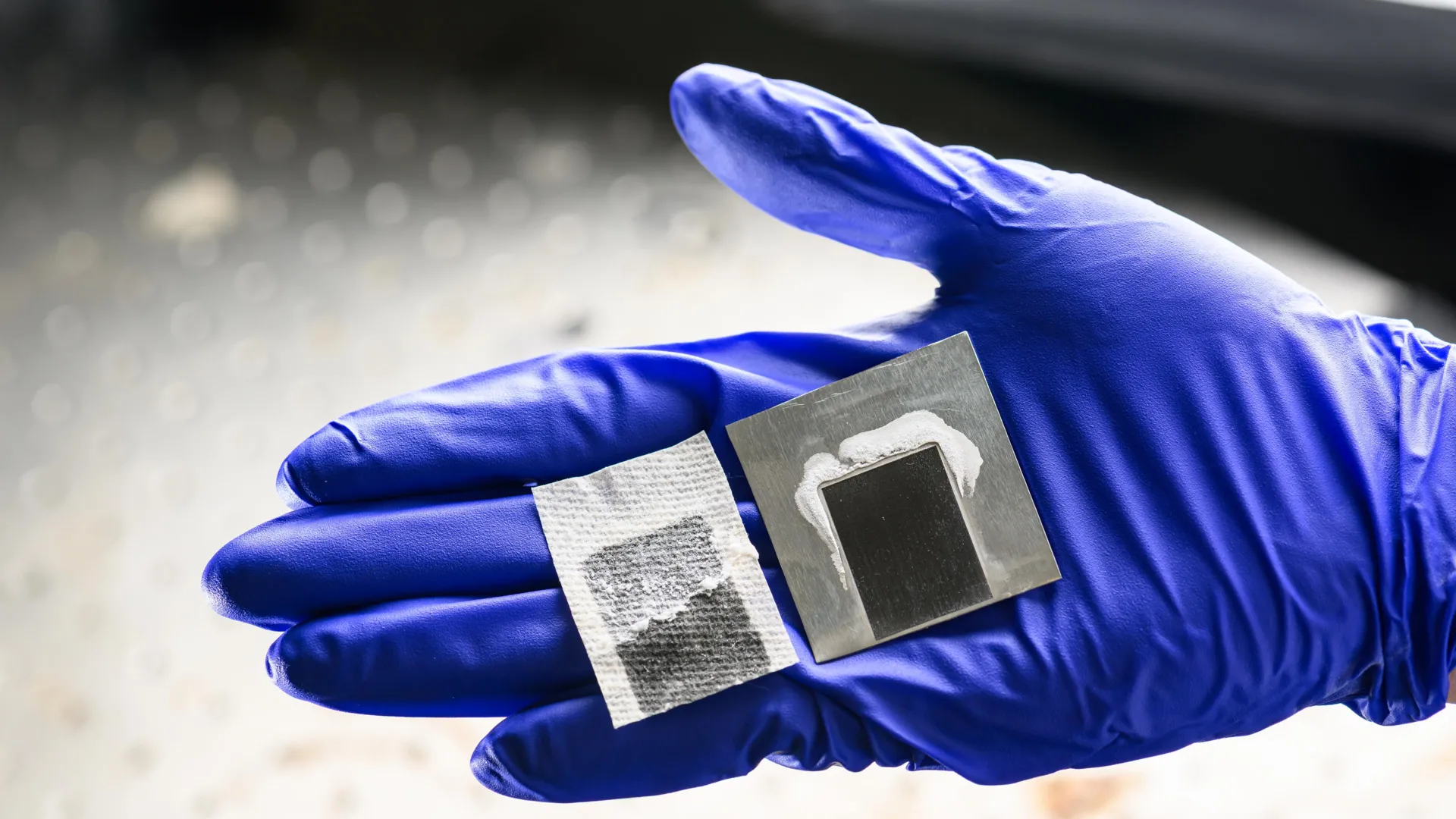
The system relies on solar panels made from black metal textured with femtosecond lasers. This treatment gives the surface two superpowers: it absorbs nearly all incoming sunlight and becomes superwicking - meaning it loves water almost as much as a dehydrated marathon runner. A laser-patterned active region draws a thin layer of seawater across the panel. Sunlight evaporates the water, which is distilled into fresh water, while dissolved salts and minerals are guided away to untreated passive regions, preventing the buildup that normally clogs lesser desalination tech.
Guo notes that many solar thermal desalination systems work fine in lab tests with simplified seawater made of just water and sodium chloride. But real oceans contain magnesium and calcium, which form hard, dense crusts when they crystallize - akin to mineral scale in a tea kettle, except seawater is far more concentrated. To tackle this, the team designed microscopic grooves on the black metal surface that encourage salts to migrate away from the active zone before they can accumulate, leveraging the coffee ring effect - the same phenomenon that leaves that annoying brown ring on your table after a spill. "If you drop coffee on a surface, eventually the water evaporates and there's a ring left at the outer edge," Guo explains. "We use that same principle to advance the salts to the passive region."
When tested with water from the Pacific, Atlantic, and Indian Oceans, the surface cleaned itself continuously, extracting fresh water while directing salts to passive areas where they could be collected without performance loss. One of the biggest perks: the recovered solids could yield valuable minerals like lithium, a key ingredient in EV batteries. In a related study in the Journal of Materials Chemistry A, Guo and colleagues embedded hydrogen titanate nanoparticles into the metal's grooves to selectively isolate lithium from other salts. Using water from Utah's Great Salt Lake, they recovered about 50 percent of the lithium contained in the leftover salts. "Mining lithium from the Earth has proven to be very taxing from an energy and environmental standpoint," Guo says, "so pulling lithium directly from saltwater could be a very important future route."
The technology is still proof-of-concept, but Guo believes it can scale up significantly, potentially boosting access to clean drinking water while creating more sustainable sources of critical minerals. The research was supported by the National Science Foundation, the Bill & Melinda Gates Foundation, and the Worldwide Universities Network. Additional contributors included Senior Scientist Subash Singh, alumnus Ran Wei '24, PhD students Luheng Tang and Tainshu Xu, and Mingjiang Ma from the Institute of Optics.
The Good Times
News in your inbox.
One sardonic roundup, delivered on your schedule. Free. Unsubscribe whenever your tolerance for wit runs out.
Already subscribed but we never reach your inbox? Check your spam folder and hit 'Not spam' (or 'Remove from spam') to bust us out of junk-mail purgatory. You'll be helping everyone else too.
Don't open any of our emails for a month and you'll be automatically removed from the mailing list.
Rewrite Article
Select parts to regenerate with a fresh AI pass. Translations will be updated automatically.
Generate AI Image
Creates a sardonic version of the article image using OpenAI.