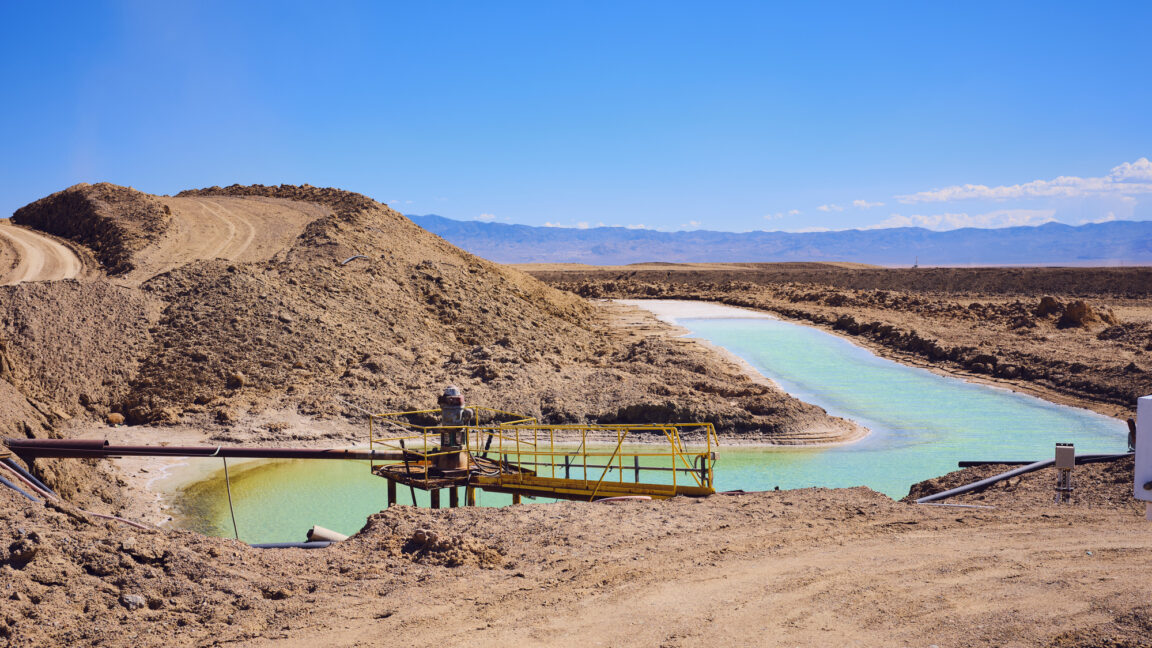
We make a lot of lithium-ion batteries. Like, a lot. So many, in fact, that the economics of their supply chain are so efficient that even if someone invents a better battery tomorrow, it would still struggle to compete on price. But what if there's a lithium shortage? That's the one thing that could shake things up. Lithium is everywhere, but lithium you can actually afford to extract is mostly in South American brines. Getting it from rocks is expensive and energy-intensive - until now.
In a paper published in today's issue of Science, a team from MIT and a couple of Boston-area companies has cooked up a new method to extract lithium from rocks that uses far less energy, regenerates its starting chemicals, and even produces sellable byproducts. Because why just get lithium when you can also get aluminum oxide and silicon dioxide? It's like a chemical all-you-can-eat buffet.
The current method for extracting lithium from spodumene - a lithium-aluminum silicate and the most abundant lithium ore - involves roasting the rock at about 1,000° C, then dousing it in sulfuric acid. This leaves behind a lot of waste and uses a lot of energy. The new process uses ammonium fluoride (NH4F) dissolved in water, heated to a cozy 70° C. This creates ions that donate fluorine to the lithium, forming lithium fluoride, while silicon and aluminum form separate compounds that can be processed into useful materials.
The aluminum path involves heating to 300° C and then 700° C to produce aluminum oxide (used to make aluminum metal) and release hydrogen fluoride and ammonia, which are then recombined to reform the original ammonium fluoride. It's a neat chemical recycling trick, though we should note that hydrogen fluoride is extremely dangerous. The silicon path is simpler: add more ammonia to get silicon dioxide, which can strengthen concrete. The lithium fluoride can either go straight into making battery electrolyte or be converted into lithium oxide for other uses.
The researchers ran the numbers: the old roasting method costs just under $9,000 per tonne of lithium. Their new process? About $5,000 per tonne - comparable to cheap brine extraction. And if you sell the aluminum and silicon byproducts, that drops by over $1,000. Of course, real-world prices fluctuate, and switching processes requires new equipment. But hey, in a world that can't stop building batteries, it's nice to have options. Plus, it's always fun to watch chemists rethink century-old industrial processes.
The Good Times
News in your inbox.
One sardonic roundup, delivered on your schedule. Free. Unsubscribe whenever your tolerance for wit runs out.
Already subscribed but we never reach your inbox? Check your spam folder and hit 'Not spam' (or 'Remove from spam') to bust us out of junk-mail purgatory. You'll be helping everyone else too.
Don't open any of our emails for a month and you'll be automatically removed from the mailing list.
Rewrite Article
Select parts to regenerate with a fresh AI pass. Translations will be updated automatically.
Generate AI Image
Creates a sardonic version of the article image using OpenAI.