The genetic code is the universal language of life, translating DNA into proteins. Every organism on Earth uses the same code, a relic of our last common ancestor. Changing it is like trying to rewrite the dictionary while everyone's still using it - except the dictionary is made of billions of base pairs, and every cell in your body depends on it.
But some brave souls have been attempting just that. Researchers have previously managed to squeeze new amino acids into bacteria and even create proteins with one fewer amino acid. The catch: they had to re-engineer every single gene in the genome to avoid catastrophic errors. A tedious process, to say the least.
Now, a team led by synthetic biologist and serial entrepreneur George Church has found a clever workaround: run two genetic codes simultaneously, so you don't have to break the one that's already working. They haven't tested it in a living cell yet - and it might cause some trouble there - but it's a creative solution that could speed up synthetic biology considerably.
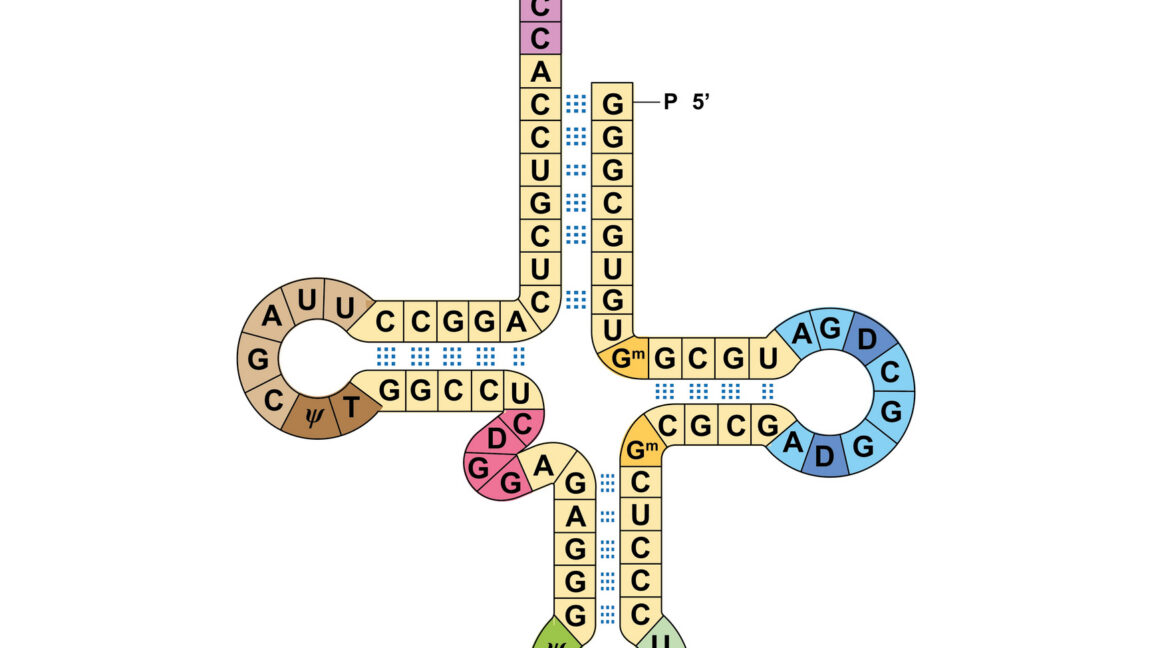
For those who skipped high school biology, here's a quick refresher. In DNA, triplets of bases encode amino acids, with three triplets serving as stop signs. DNA is transcribed into messenger RNA (mRNA), which is then read by a ribosome - a complex of proteins and RNA. Transfer RNAs (tRNAs) match their three-base anticodons to the mRNA codons and deliver the corresponding amino acid. Enzymes called aminoacyl-tRNA synthetases 'charge' each tRNA by attaching the correct amino acid to it.
To change the genetic code, you'd typically have to modify the tRNA sequences, the charging enzymes, or both - and ensure the changes don't disrupt every gene in the genome. That's a nightmare of coordination, and it's why progress has been slow.
The new work, published in Nature, hinges on a subtle detail: part of the ribosome's RNA base pairs with a conserved sequence on tRNAs. This interaction is essential, but since all tRNAs share that sequence, it's not something you'd normally think to change. The researchers wondered: what if we made two versions of tRNAs - one with the standard sequence, one with a tweak - and a matching tweak in a separate population of ribosomes?
They did just that. They first had to figure out whether the modified tRNAs could still be charged by the synthetases - not a trivial question, since no one had asked it before. They developed a clever assay using cell-free translation, robotics, next-generation sequencing, and analytical chemistry. The result: most modified tRNAs could be charged, though at lower efficiency, with some sequence changes tolerated better than others.
Next, they confirmed that normal ribosomes ignore the modified tRNAs, while ribosomes with the matching changes happily use them. They then designed an mRNA that could be translated by both systems, with different outcomes depending on which code was read. When they mixed both tRNA populations, both ribosome populations, and all the necessary chemicals, they got two different proteins - one from each genetic code.
It's a pretty neat trick. But before you start dreaming of alien life in a petri dish, note that this was done in a cell-free system. In an actual cell, the alternative ribosomes would try to translate every mRNA they encounter, likely producing a mess of truncated or malformed proteins that could kill the cell. The researchers are aware of this, and so are we - but we're not clever enough to see a way around it. Maybe some sharp biologist will.
The paper, published in Nature, 2026, DOI: 10.1038/s41586-026-10949-y, is a testament to the power of asking 'what if?' - and to the fact that even the most universal biological code isn't set in stone.
The Good Times
News in your inbox.
One sardonic roundup, delivered on your schedule. Free. Unsubscribe whenever your tolerance for wit runs out.
Already subscribed but we never reach your inbox? Check your spam folder and hit 'Not spam' (or 'Remove from spam') to bust us out of junk-mail purgatory. You'll be helping everyone else too.
Don't open any of our emails for a month and you'll be automatically removed from the mailing list.
Rewrite Article
Select parts to regenerate with a fresh AI pass. Translations will be updated automatically.
Generate AI Image
Creates a sardonic version of the article image using OpenAI.