NASA's New Mars Helicopter Blades Promise Flights So Long You'll Forget It's a Desert Planet
NASA's new roamx-0201 airfoil could let Mars helicopters fly up to 18.7 km in one go - 26 times farther than Ingenuity - because apparently, 0.7 km just wasn't showing off enough.
NASA is at it again, tinkering with the future of flight on Mars - because apparently, flying a helicopter on another planet once just wasn't enough. Researchers are developing rotorcraft blades that could let future Mars helicopters fly higher, farther, and generally show off more than the plucky little Ingenuity, which made history as the first powered aircraft to fly on another planet. The SkyFall mission, slated for launch in 2028, will send a trio of helicopters to Mars, building on that legacy with blades designed for the Red Planet's pesky thin atmosphere - featuring a curved edge that's reminiscent of, but distinct from, blades used on Earth. Because why make it easy?
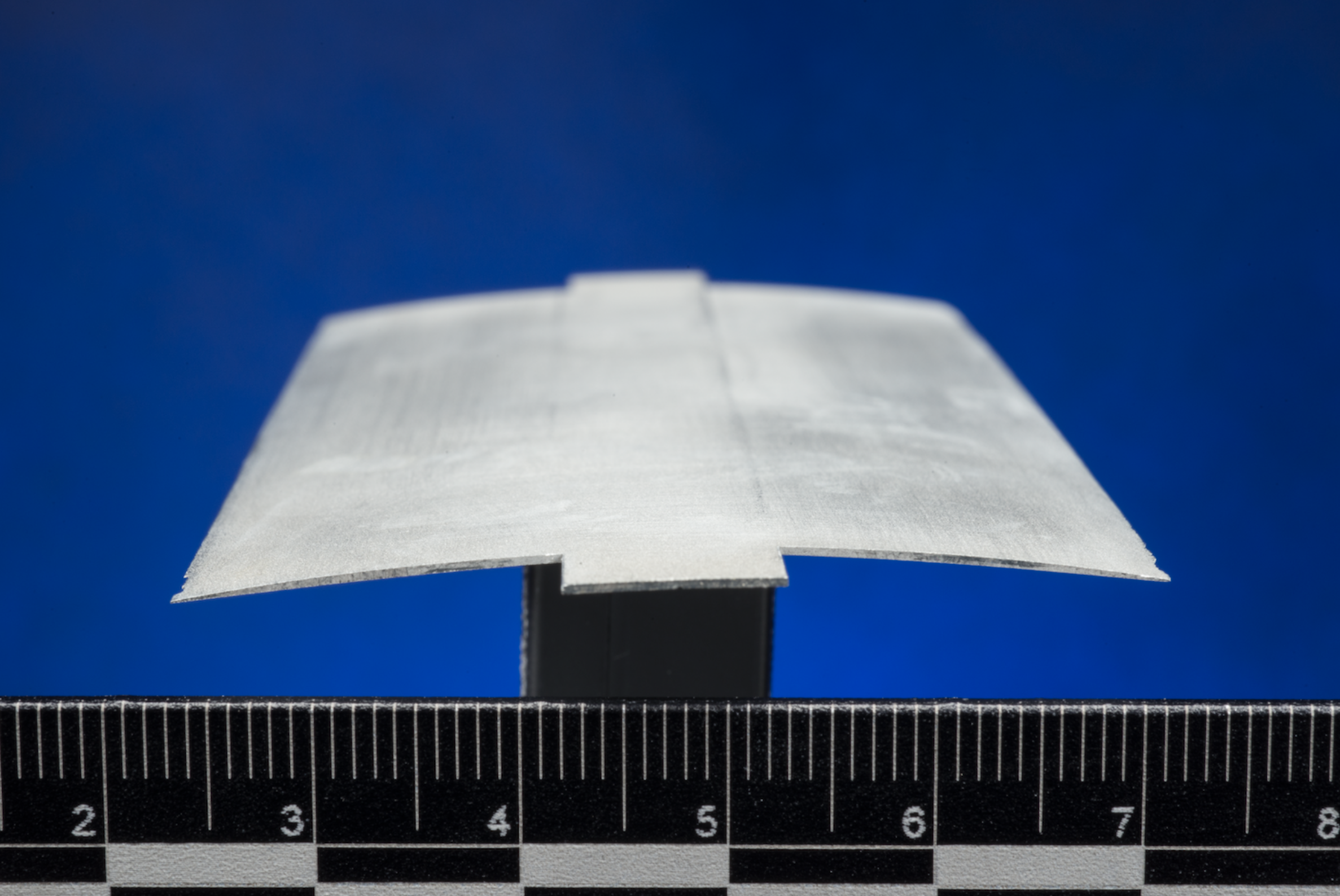
The real fun begins with the unconventional: thinner, sharper blades that could expand single-flight range for missions after SkyFall. A team at NASA's Ames Research Center in California's Silicon Valley, working with Imperial College London and Nagoya University in Japan, has been testing a new blade cross-section - or airfoil - dubbed roamx-0201. Using advanced simulations and algorithms tuned to Mars conditions, they landed on a thinner, asymmetrical shape that promises to significantly boost aerodynamic performance. Wind tunnel tests confirmed the design not only improved performance but also recovered better in risky flight conditions. Because nothing says 'good design' like surviving the aerodynamic equivalent of a bad day.
The numbers are impressive: high-fidelity simulations showed the redesigned blades could expand the distance covered in one uninterrupted flight from Ingenuity's 0.7 kilometers to as much as 18.7 kilometers - while carrying scientific instruments. That's a roughly 26-fold increase, or about the distance from NASA headquarters to a decent cup of coffee. The findings were announced in a paper published Sept. 22 in the journal of the American Institute of Aeronautics and Astronautics, which is presumably where aerodynamicists go to brag.
So why do these blades work so well? Partly because they can operate longer at higher speeds before hitting 'drag divergence' - a phenomenon where performance suddenly drops when rotors approach the speed of sound, which on Mars is lower than on Earth. Think of it as the aerodynamic equivalent of hitting a pothole at highway speed. The roamx-0201 blades also differ in how they use turbulence to create lift. As air flows over a blade, it forms a thin region called the 'boundary layer.' The new airfoil intentionally disrupts that flow at the leading edge to create a disturbance that, counterintuitively, pulls the blade upward - helping lift the rotorcraft more effectively than earlier designs. It's like tripping on purpose to catch your balance, but with more science.
Another challenge is 'stall,' where performance drops sharply and flight becomes unstable after a change in airflow angle. Ingenuity's blades experienced steep performance degradation at stall, but under the conditions studied, the roamx-0201 design showed significantly improved stall behavior. That means future helicopters could operate safely at a wider range of flight angles - always a plus when you're flying in an atmosphere that's 1% as dense as Earth's and there's no roadside assistance.
While the technology isn't yet ready for Mars, the tests are helping engineers understand and resolve discrepancies between computational predictions and real-world performance - a gap that has humbled many a simulation. Ongoing research across NASA aims to enable more efficient Mars helicopters that can fly farther, carry more payload, and unlock new science and discovery missions. Because if we're going to explore Mars, we might as well do it with style, range, and a healthy disregard for the laws of aerodynamics as we know them.
The Good Times
News in your inbox.
One sardonic roundup, delivered on your schedule. Free. Unsubscribe whenever your tolerance for wit runs out.
Already subscribed but we never reach your inbox? Check your spam folder and hit 'Not spam' (or 'Remove from spam') to bust us out of junk-mail purgatory. You'll be helping everyone else too.
Don't open any of our emails for a month and you'll be automatically removed from the mailing list.
Rewrite Article
Select parts to regenerate with a fresh AI pass. Translations will be updated automatically.
Generate AI Image
Creates a sardonic version of the article image using OpenAI.