Morocco Scoops Up Migrants Near Ceuta, Because Apparently History Repeating Itself Is a Thing
Morocco detains 111 would-be migrants near Ceuta, Spain and Italy bicker over border controls, and everyone agrees the problem is definitely someone else's fault.
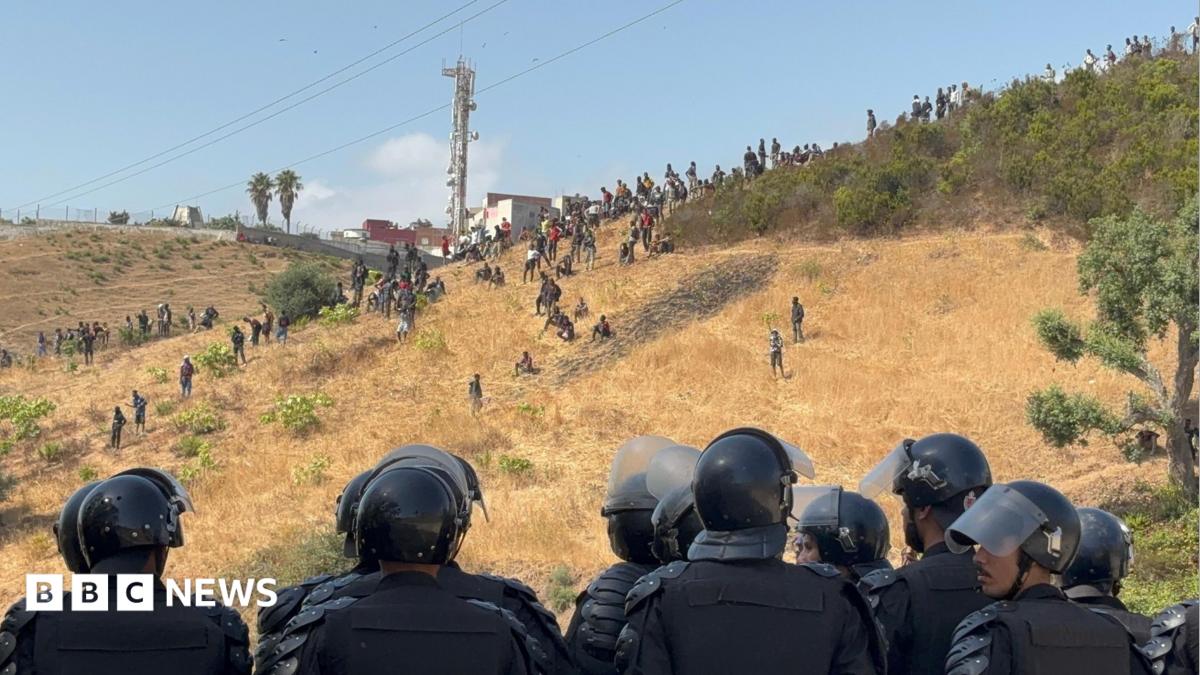
Moroccan authorities have once again played the role of bouncer at Europe's back door, intercepting dozens of migrants who fancied a quick dash into the Spanish exclave of Ceuta. Reports say more than 100 hopefuls were blocked near the border town of Fnideq, known to the Spaniards as Castillejos, about 3km (1.8 miles) from the frontier.
This comes a mere fortnight after roughly 78,000 migrants made the maritime hop to Ceuta in a matter of hours - a party that left 100 dead, according to the city's mayor, who also noted that the vast majority of arrivals had already boomeranged back to Morocco. Because nothing says 'successful migration policy' like a mass round-trip.
In response to the earlier influx - and to the social media chatter promising a second coming this weekend - security has been beefed up. The security sources say 111 people were detained in or around Fnideq, most of them from sub-Saharan Africa. Moroccan police, some decked out in riot gear, reportedly used tear gas to shoo away groups of migrants who had gathered on nearby hills, presumably to get a better view of the action.
Earlier this week, Morocco's government announced it was keeping an eye on 'social media posts and messages of unknown origin' that called for a mass crossing on Saturday, and warned it would prosecute the organisers and participants. Because nothing says 'deterrent' like a promise of legal consequences for trying to escape poverty.
Security at the breakwater entrance was '10 times stronger than the previous day', reported Spanish newspaper El País. Morocco dispatched army officers, navy speedboats, and drones to the border on Saturday, while Madrid deployed more than 1,500 security officers to patrol the area. Spain has also installed a metal fence and a floating barrier following last month's influx - because nothing says 'welcome' like a two-layered aquatic obstacle course.
The crisis had calmed since breaking out in late July, but it has sparked tensions between EU nations that share open borders, as well as criticism of the Spanish government. Italy, in a move that screams 'solidarity', suspended the 29-member Schengen arrangement of free movement with Spain and introduced border checks on arrivals from Spain. Italy was backed by Finland and Denmark, while the Czech Republic called for Spain's membership to be temporarily suspended. Because when a neighbour's house is on fire, the best move is to build a higher fence.
Spain reacted angrily, with Prime Minister Pedro Sánchez noting that Ceuta isn't part of the Schengen area anyway - so the migrants hadn't actually reached the Spanish mainland and could therefore travel to any other European country. Wait, what? That's like saying the fire isn't in your living room, it's in the garage, so it's fine. Spain urged Italy to drop its border controls and introduced its own when Rome refused, citing the possibility of another influx on 15 August.
On Saturday, Italy's Foreign Minister Antonio Tajani said his country had been afraid of a 'risk of a new wave of arrivals in Ceuta'. 'We're not waging any kind of battle against Spain; we're simply carefully controlling arrivals,' he said, in the tone of someone who definitely isn't waging a battle. 'Instead of worrying about us, Spain should worry about Morocco: that's where the problems are coming from, certainly not from our controls.'
And so the cycle continues: migrants try to cross, authorities block them, politicians argue, and everyone agrees that the root cause is somewhere else. In the meantime, the hills of Fnideq are probably getting a nice layer of tear gas residue, and Instagram accounts are still cashing in on paid advice for help to cross. Because in 2021, even desperation has an influencer marketing strategy.
The Good Times
News in your inbox.
One sardonic roundup, delivered on your schedule. Free. Unsubscribe whenever your tolerance for wit runs out.
Already subscribed but we never reach your inbox? Check your spam folder and hit 'Not spam' (or 'Remove from spam') to bust us out of junk-mail purgatory. You'll be helping everyone else too.
Don't open any of our emails for a month and you'll be automatically removed from the mailing list.
Rewrite Article
Select parts to regenerate with a fresh AI pass. Translations will be updated automatically.
Generate AI Image
Creates a sardonic version of the article image using OpenAI.