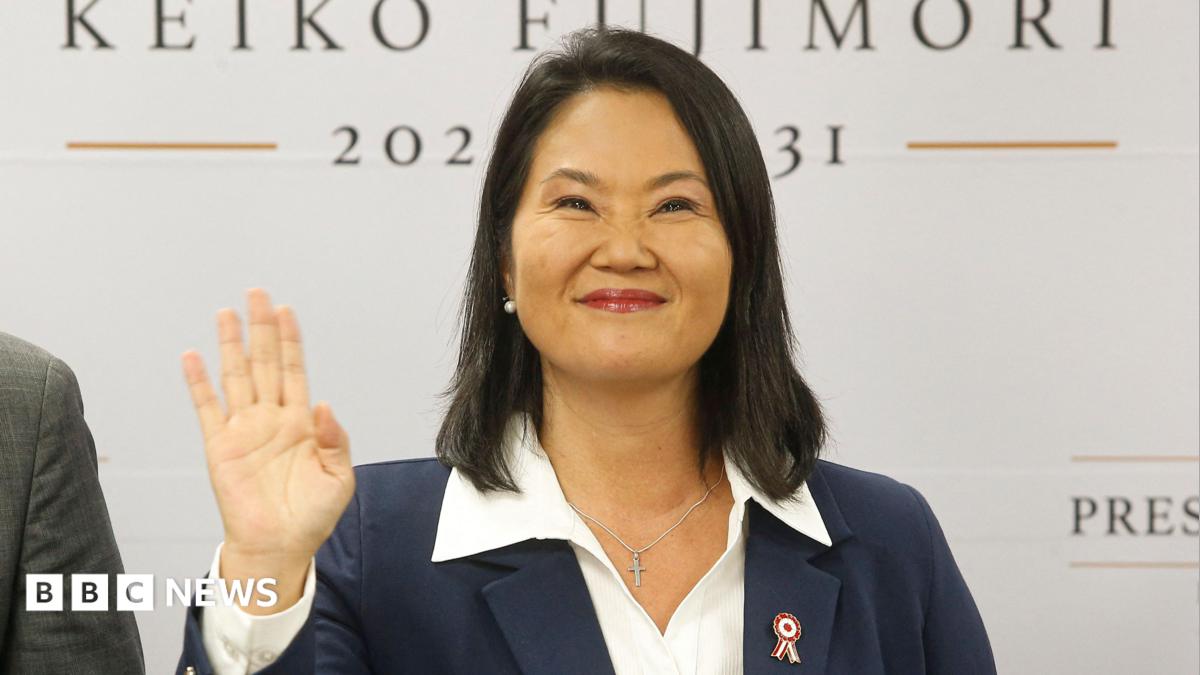
Keiko Fujimori Finally Wins Peru's Presidency After Fourth Attempt, Margin Smaller Than a Stadium Crowd
Keiko Fujimori wins Peru's presidency by a razor-thin margin on her fourth try, promising a crackdown on crime while her opponent cries foul. Latin America tilts right.
Right-wing candidate Keiko Fujimori has been declared the winner of Peru's presidential election, nearly a month after the vote - because why rush these things, right? The 51-year-old daughter of disgraced former President Alberto Fujimori secured 50.135% of the vote in the 7 June runoff, beating left-wing candidate Roberto Sánchez by a margin of less than 50,000 votes, according to figures certified by Peru's electoral court.
This is Fujimori's fourth stab at the presidency, having lost in 2011, 2016, and 2021 by similarly hair-splitting margins. She campaigned on a promise to crack down on organized crime, leaning heavily on her father's controversial legacy - which includes crimes against humanity for extra-judicial killings and forced sterilizations. But hey, nobody's perfect.
Sánchez, 57, has alleged the runoff was "seriously compromised" and threatened legal action, claiming that strong support for Fujimori among Peruvian voters abroad smelled fishy. His party has appealed the electoral court's proclamation, calling for the vote to be nullified. Good luck with that.
Fujimori, in a statement, said she would assume the presidency "with responsibility, humility and a deep sense of duty" - which is politician-speak for "I barely won, so let's not rock the boat." Her swearing-in is set for 28 July, making her Peru's ninth president in a decade. That's a lot of turnover for a country that just wants some stability.
Her victory, coinciding with that of Colombia's president-elect Abelardo de la Espriella, marks a shift to the right in Latin American politics. Fujimori joins a club of right-wing leaders like El Salvador's Nayib Bukele and Ecuador's Daniel Noboa, who have all cozyed up to US President Donald Trump. Meanwhile, Brazil's Luiz Inácio Lula da Silva finds himself as the region's lonely left-wing standard-bearer, facing the son of convicted former President Jair Bolsonaro in elections later this year. The pendulum swings, and Peru just got a nudge to the right.
The Good Times
News in your inbox.
One sardonic roundup, delivered on your schedule. Free. Unsubscribe whenever your tolerance for wit runs out.
Already subscribed but we never reach your inbox? Check your spam folder and hit 'Not spam' (or 'Remove from spam') to bust us out of junk-mail purgatory. You'll be helping everyone else too.
Don't open any of our emails for a month and you'll be automatically removed from the mailing list.
Rewrite Article
Select parts to regenerate with a fresh AI pass. Translations will be updated automatically.
Generate AI Image
Creates a sardonic version of the article image using OpenAI.