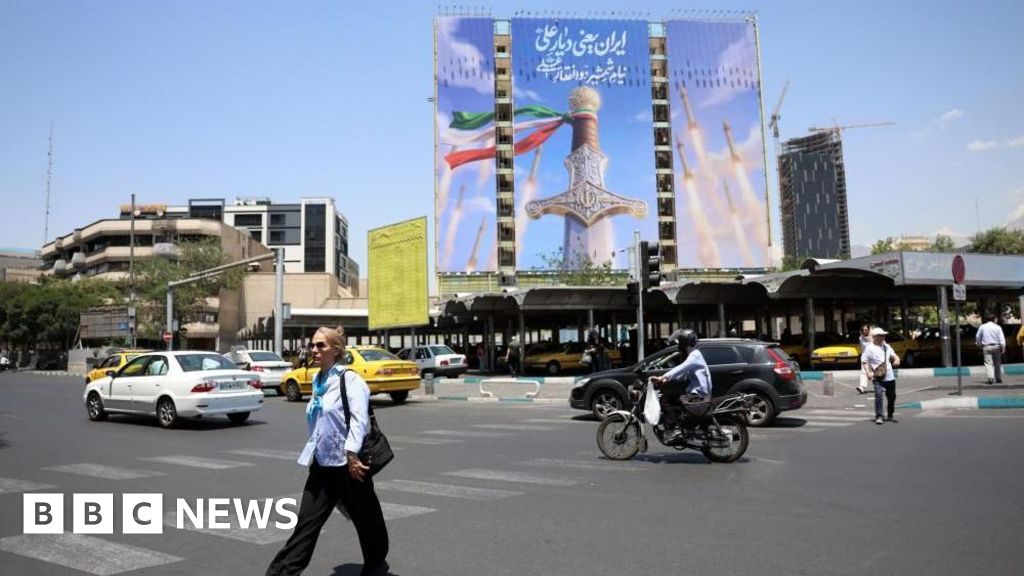
Iran Hints Hormuz Might Reopen, Which Would Delight Everyone Who Likes Oil
Iran says a deal to reopen the Strait of Hormuz is near, which would be great for global oil supplies, provided everyone actually signs the thing this time.
Iran's Foreign Minister Seyed Abbas Araghchi has told state TV that a deal with the US to end the fighting is close, and that reopening the Strait of Hormuz is part of the package. He also mentioned the lifting of a US blockade of Iran, though talks on Iran's nuclear programme will apparently have to wait for a second date, like a reluctant Tinder match.
US officials have confirmed some details, but stressed that any economic benefits for Iran will depend on Tehran actually doing what it says it will do. The war began on 28 February with US and Israeli strikes across Iran, prompting Iran to attack Israel and US-allied Gulf states, and to close the Strait of Hormuz - a move that made the global oil market very nervous indeed.
Despite a ceasefire in April, the two sides have exchanged intermittent fire, including two rounds of tit-for-tat strikes this week. President Donald Trump said on Thursday he had cancelled "scheduled attacks" because negotiators had "just made a great settlement". Iranian media then published details of a 14-point deal that Trump called fake news, saying it "bears no relation to the truth". Pakistani Prime Minister Shehbaz Sharif, whose country helped mediate, said the Memorandum of Understanding (MOU) between the US and Iran had been agreed and awaited finalising.
Araghchi acknowledged there are "supporters and opponents" of the terms among Iran's Supreme National Security Council, and that a collective decision had not been reached. "For now, we must wait. If approved, the agreement will be signed remotely," he said. Israel is not involved in the talks, which aim to extend the ceasefire and start negotiations on Iran's nuclear programme - which Iran insists is for peaceful purposes, while Western countries remain sceptical.
US officials said the deal would reopen the Strait of Hormuz in return for lifting the blockade on Iranian shipping, with these steps taking effect more or less immediately. Then comes a 60-day period of negotiation focusing on Iran's enriched uranium, which would be destroyed on site and removed, though the precise mechanism is still TBD. On the economic side, no money up-front; instead, a staged reintegration into the global economy, with sanctions lifted and assets unfrozen incrementally. The deal also calls on Iran to stop funding proxy groups like Hezbollah.
US officials emphasised the MOU is based on "performance", not trust. There is cautious optimism from all sides - the US, Iran, Pakistan, and Qatar - but variations of this agreement have been expected several times over the past month or two, only to fall away. The difference now, according to the US administration, is greater optimism and openness. Araghchi said the deal could be signed "in the coming days".
As for the Strait of Hormuz, through which some 20% of the world's oil and LNG normally transits, Araghchi said its administration would "no longer be the same as before". Since closing it, Iran has insisted on a fee for vessels seeking to cross, while the US insists passage should be free. The MOU also envisages an end to the conflict between Israel and Hezbollah in Lebanon, though Israel's prime minister has said his country will strike Hezbollah if attacks continue.
The Good Times
News in your inbox.
One sardonic roundup, delivered on your schedule. Free. Unsubscribe whenever your tolerance for wit runs out.
Already subscribed but we never reach your inbox? Check your spam folder and hit 'Not spam' (or 'Remove from spam') to bust us out of junk-mail purgatory. You'll be helping everyone else too.
Don't open any of our emails for a month and you'll be automatically removed from the mailing list.
Rewrite Article
Select parts to regenerate with a fresh AI pass. Translations will be updated automatically.
Generate AI Image
Creates a sardonic version of the article image using OpenAI.