Community College Instructors Drag Astronomy Textbook Into 21st Century, Kicking and Screaming
NASA's SciAct teams are dragging the OpenStax astronomy textbook into the 21st century by adding active learning modules - so students can actually stay awake while learning about the cosmos.
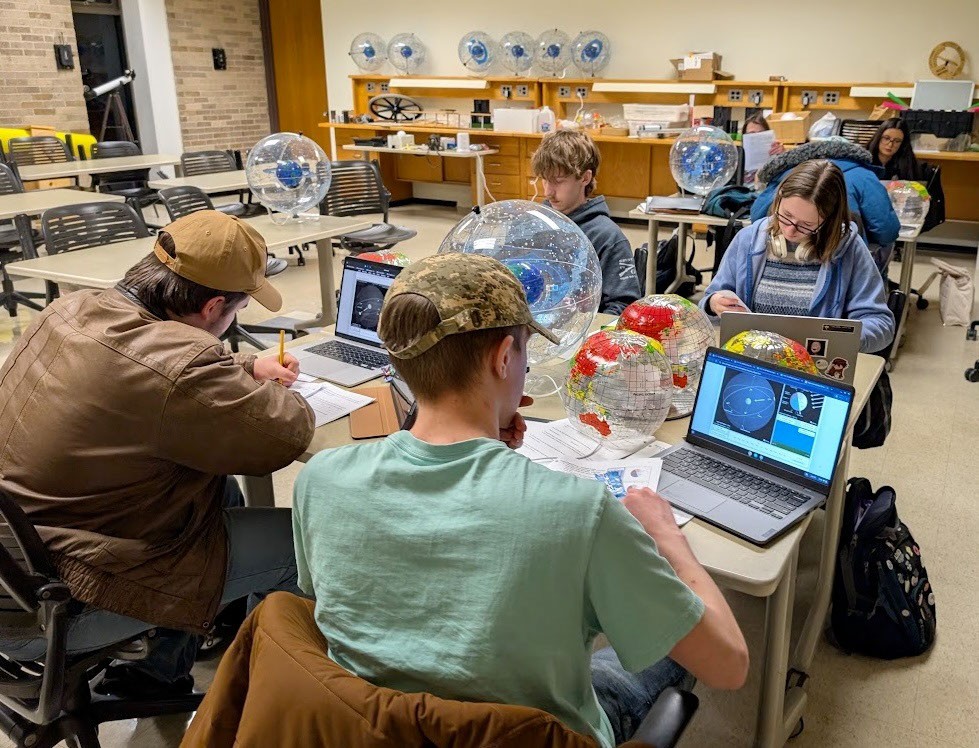
Teaching astronomy with a traditional textbook alone is like trying to appreciate the cosmos through a keyhole - technically possible, but you're missing the fireworks. NASA's Science Activation (SciAct) program has decided that's not good enough. Three project teams - the NASA Community College Network (NCCN, led by the SETI Institute) with five expert community college instructors, Infiniscope (led by Arizona State University), and NASA Treks - gathered for a virtual workshop in June 2026 to inject active learning into the staid pages of OpenStax's Astronomy 101 textbook.
The goal: transform the widely used but structurally old-school text into Relevant Engaging Active Learning (REAL) courseware, all while preserving its core content and clear explanatory narrative. Because who needs a textbook that just sits there when it could be doing jumping jacks? Over two weeks, each instructor adopted one of the opening five chapters, enhancing them with active learning modules drawn from SciAct projects like NASA Treks, Universe of Learning, and Cosmic Data Stories. The results were presented in July and will be field-tested in community college classrooms in Fall 2026.
This workshop was a proof of concept, a toe dipped into the cosmic ocean to see if an existing textbook can morph into an active learning tool that boosts student understanding of fundamental astronomical concepts. Next steps include expanding the program and systematically reimagining the entire OpenStax book - and by extension, the entire Universe! Because why stop at five chapters when you can do all of them? Importantly, this effort highlights new and highly impactful possibilities for disseminating NASA SciAct resources, which is a fancy way of saying: more cool space stuff for everyone.
Special thanks to the five community college instructors who brought their wisdom, experience, and skills to the table: Carver Bierson (Scottsdale Community College, Scottsdale, Arizona), Dan Chase (Modesto Community College, Modesto, California), Dennis Just (Pima Community College, Pima, Arizona), Steve Tuckey (Jackson College, Jackson, Michigan), and Sally Watt (Glendale Community College, Glendale, Arizona).
NCCN, Infiniscope, NASA Treks, and many contributing projects are supported by NASA cooperative agreement awards and are part of the NASA Science Activation Program portfolio, which connects learners with authentic NASA science experiences through partnerships with educators and community organizations. In other words, NASA is making sure your intro astronomy class doesn't put you to sleep.
The Good Times
News in your inbox.
One sardonic roundup, delivered on your schedule. Free. Unsubscribe whenever your tolerance for wit runs out.
Already subscribed but we never reach your inbox? Check your spam folder and hit 'Not spam' (or 'Remove from spam') to bust us out of junk-mail purgatory. You'll be helping everyone else too.
Don't open any of our emails for a month and you'll be automatically removed from the mailing list.
Rewrite Article
Select parts to regenerate with a fresh AI pass. Translations will be updated automatically.
Generate AI Image
Creates a sardonic version of the article image using OpenAI.