Tiny X-Ray Telescope Promises to Solve Lunar Chemistry Without Actually Visiting the Moon
A tiny X-ray telescope, originally designed for Earth's magnetosphere, could map the Moon's chemistry in two years - because apparently the Moon has been hiding its elemental secrets long enough.
Researchers at Tokyo Metropolitan University have used simulations to show that a small, newly developed X-ray telescope could help create a chemical map of the entire lunar surface - a major step toward understanding how the Moon formed, changed, and evolved over time. Because, let's face it, we're not getting samples from every crater anytime soon.
Their detailed modeling, which included both the telescope detector and a realistic Moon-orbiting satellite mission, suggests that one telescope could map five important elements in about two years. A larger five-by-five array of detectors could produce sharper maps and complete the work more quickly. Because why do in two years what you could do in one with 25 telescopes?
The Moon's geological history is still not fully understood, largely because scientists don't yet have a complete geochemical map of the lunar surface. Since researchers cannot simply collect samples from every part of the Moon - logistics, you know - they must rely on remote sensing methods like X-ray fluorescence imaging. Detectors point at the Moon to capture X-rays emitted by specific elements after they are struck by solar radiation, revealing which elements are present across different regions.
Earlier observations from the Apollo and Chandrayaan missions produced useful partial maps, but a full global map remains elusive. Missions have limited time to gather enough sunlight-driven X-ray signals, and detectors can degrade during long periods in space. The problem is especially acute near the Moon's poles, where solar X-rays are weaker.
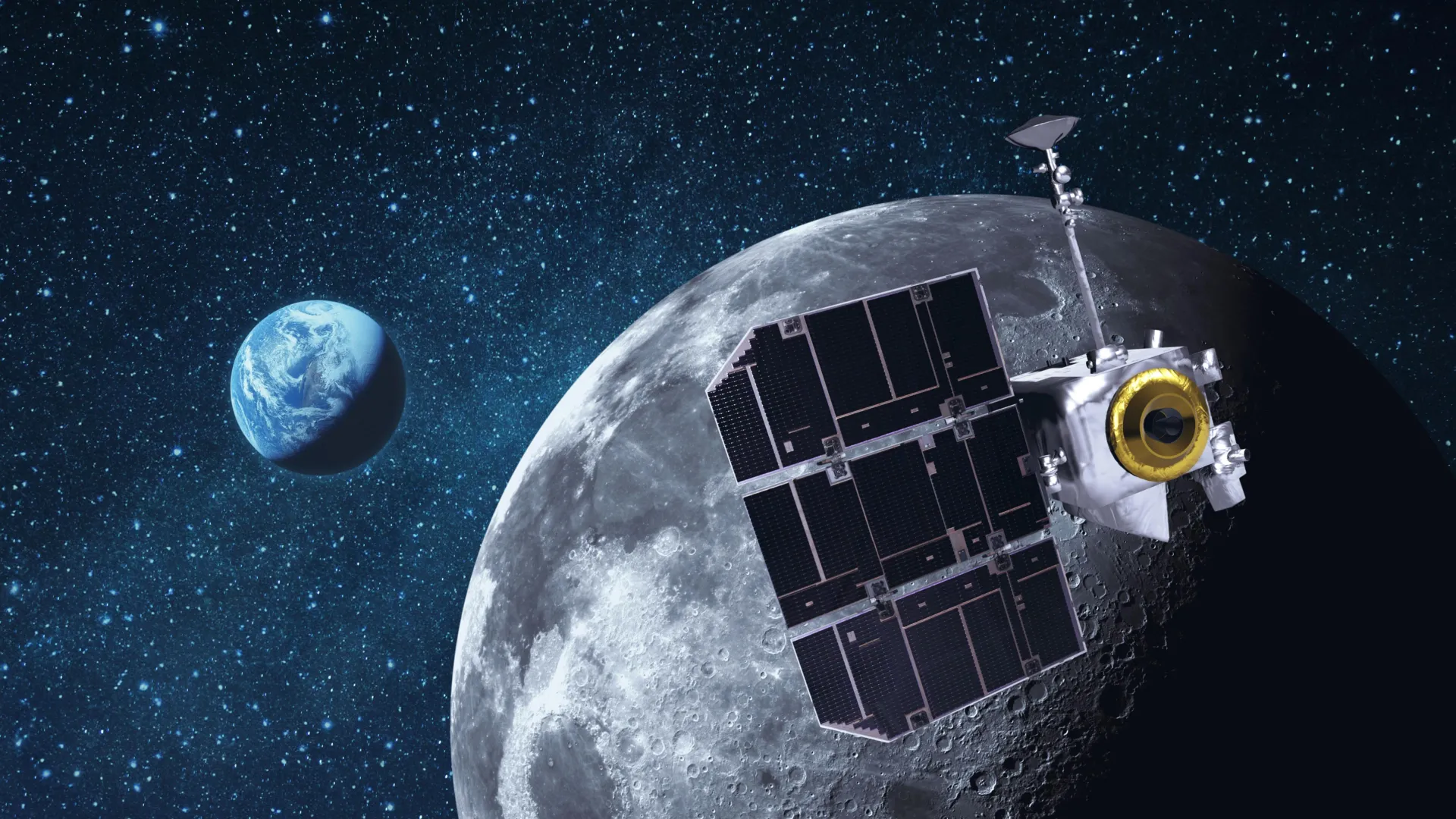
To address these obstacles, a team led by Airi Toida and Prof. Yuichiro Ezoe proposed using a compact X-ray telescope on a satellite orbiting the Moon. The telescope, originally designed for studying Earth's magnetosphere, weighs less than ten kilograms - small enough to be practical for long-term lunar satellite observations. Traditional X-ray telescopes are often too large and heavy for this type of mission. The detector has also been tested in radiation conditions far harsher than those expected in lunar orbit.
The researchers then added the telescope's specifications into a numerical simulation to test whether a satellite mission could successfully map the Moon. Assuming 300 solar flares per year and a single telescope aboard a Moon-orbiting satellite, the simulation showed that the whole lunar surface could be mapped for five elements (oxygen, iron, magnesium, aluminum, silicon) in two years, using a grid size of 70 x 70 kilometers.
Because the telescope is so compact, the team also examined a satellite carrying a five-by-five array of telescopes. According to the simulations, this 25-telescope system could reduce the mission time to one year. With two years of operation, it could also map sodium, while improving the grid size to 30 x 30 kilometers.
If either mission concept becomes reality, it would produce the first complete map of elemental abundance across the entire Moon - giving scientists a powerful new tool for studying lunar geology and reconstructing the Moon's long and complex history. This work was supported by JSPS KAKENHI Grant Number 21H04972. Materials provided by Tokyo Metropolitan University.
The Good Times
News in your inbox.
One sardonic roundup, delivered on your schedule. Free. Unsubscribe whenever your tolerance for wit runs out.
Already subscribed but we never reach your inbox? Check your spam folder and hit 'Not spam' (or 'Remove from spam') to bust us out of junk-mail purgatory. You'll be helping everyone else too.
Don't open any of our emails for a month and you'll be automatically removed from the mailing list.
Rewrite Article
Select parts to regenerate with a fresh AI pass. Translations will be updated automatically.
Generate AI Image
Creates a sardonic version of the article image using OpenAI.