Scientists Develop Dirt-Powered Fuel Cell, Because Batteries Are So Last Season
Northwestern scientists create a fuel cell that runs on dirt microbes, offering a potentially eternal power source for sensors, because replacing batteries is apparently too much work.
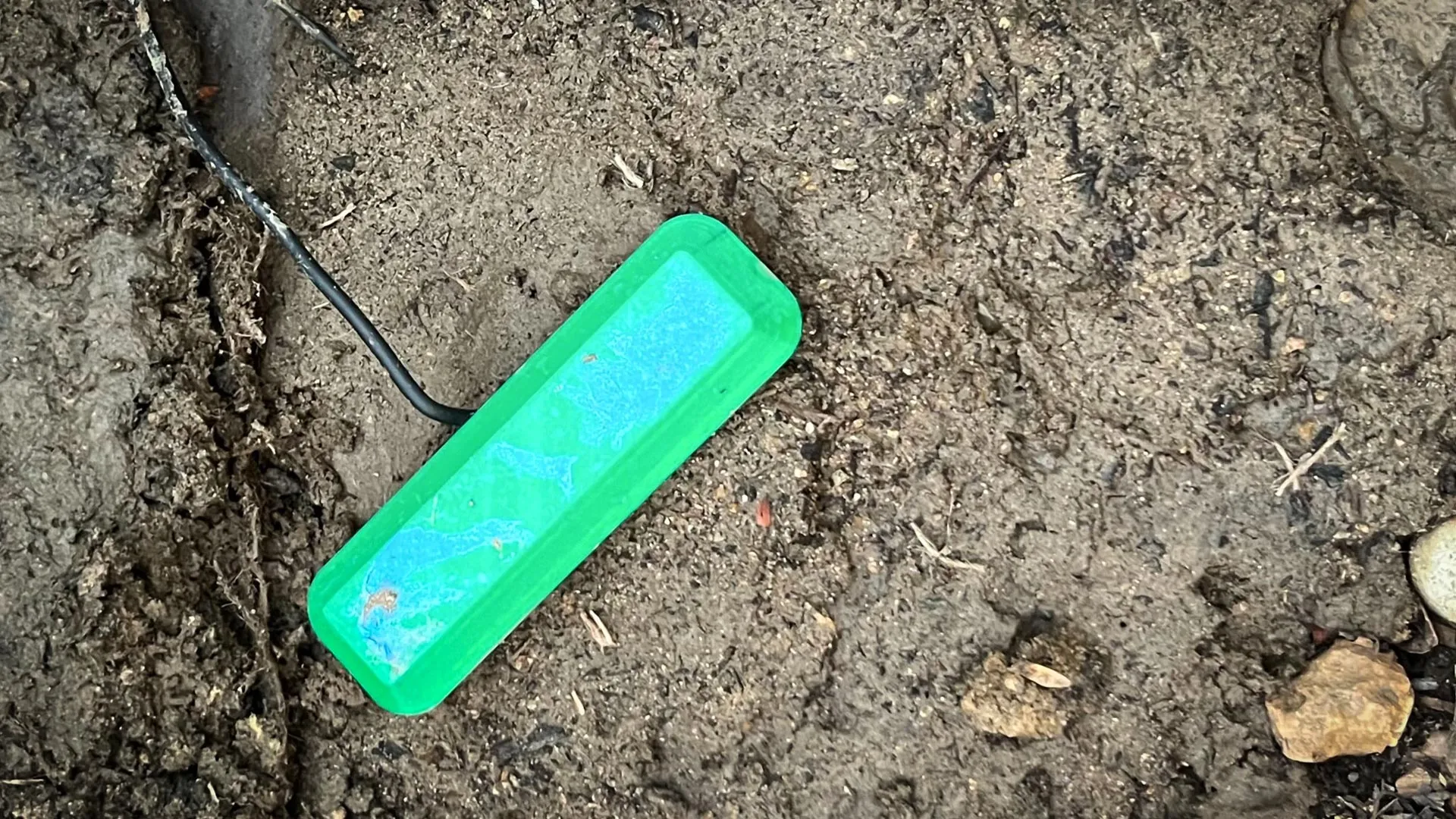
Researchers at Northwestern University have developed a fuel cell, roughly the size of a paperback book, that generates electricity using microbes naturally found in soil. The device captures energy released as these microorganisms break down organic material, producing small amounts of power. It's designed to run underground sensors for precision agriculture and environmental monitoring, offering a potential alternative to traditional batteries, which contain toxic materials, rely on complex global supply chains, and contribute to electronic waste.
The team demonstrated the fuel cell by using it to operate sensors that measure soil moisture and detect touch - a capability that could help monitor wildlife movement. The system includes a small antenna that sends data wirelessly by reflecting existing radio frequency signals, keeping energy use extremely low. The device proved reliable across a wide range of conditions, functioning in both dry soil and flooded environments, and produced more sustained power than similar systems, lasting about 120% longer.
The study was published in the Proceedings of the Association for Computing Machinery on Interactive, Mobile, Wearable and Ubiquitous Technologies. The researchers also publicly released their designs, tutorials, and simulation tools. As Northwestern alumnus Bill Yen, who led the work, noted, with trillions of Internet of Things (IoT) devices on the horizon, we can't build them all out of lithium and heavy metals. He said, "As long as there is organic carbon in the soil for the microbes to break down, the fuel cell can potentially last forever."
Microbial fuel cells (MFCs) work somewhat like a battery, with an anode, cathode, and electrolyte, but rely on bacteria that naturally release electrons to create an electric current. Senior author George Wells explained, "We're not going to power entire cities with this energy. But we can capture minute amounts of energy to fuel practical, low-power applications." The challenge with current power sources for precision agriculture sensors is that batteries run out and solar panels get dirty, require sunlight, and take up space.
Soil-based MFCs have existed since 1911 but have struggled with unreliable performance and low output power, especially in low-moisture conditions. The Northwestern team spent two years developing and testing designs, comparing four versions over nine months. Their breakthrough came from a change in geometry: positioning the anode (made of carbon felt) horizontally and the cathode (made of conductive metal) vertically. This structure ensures a steady oxygen supply at the surface and maintains hydration below, with a protective cap and air chamber. A waterproof coating helps during flooding.
The final prototype performed well across soil conditions from moderately dry (41% water by volume) to fully submerged, generating 68 times more power than required to run its sensors. Since the study's publication, interest has grown, with researchers working to improve efficiency, stability, and materials, including exploring biodegradable designs. The team aims to create fully biodegradable versions to avoid complex supply chains and conflict minerals. Co-author Josiah Hester noted the goal is to "build devices that use local supply chains and low-cost materials so that computing is accessible for all communities."
The study, "Soil-powered computing: The engineer's guide to practical soil microbial fuel cell design," was supported by the National Science Foundation (award number CNS-2038853), the Agricultural and Food Research Initiative (award number 2023-67021-40628) from the USDA National Institute of Food and Agriculture, the Alfred P. Sloan Foundation, VMware Research, and 3M.
The Good Times
News in your inbox.
One sardonic roundup, delivered on your schedule. Free. Unsubscribe whenever your tolerance for wit runs out.
Already subscribed but we never reach your inbox? Check your spam folder and hit 'Not spam' (or 'Remove from spam') to bust us out of junk-mail purgatory. You'll be helping everyone else too.
Don't open any of our emails for a month and you'll be automatically removed from the mailing list.
Rewrite Article
Select parts to regenerate with a fresh AI pass. Translations will be updated automatically.
Generate AI Image
Creates a sardonic version of the article image using OpenAI.