Scientists Capture Hidden Electronic State Forming in Just 30 Femtoseconds, Because Apparently That's a Thing Now
Japanese researchers catch a hidden electronic state forming in just 30 femtoseconds, proving that even materials can't keep secrets from ultrafast lasers.
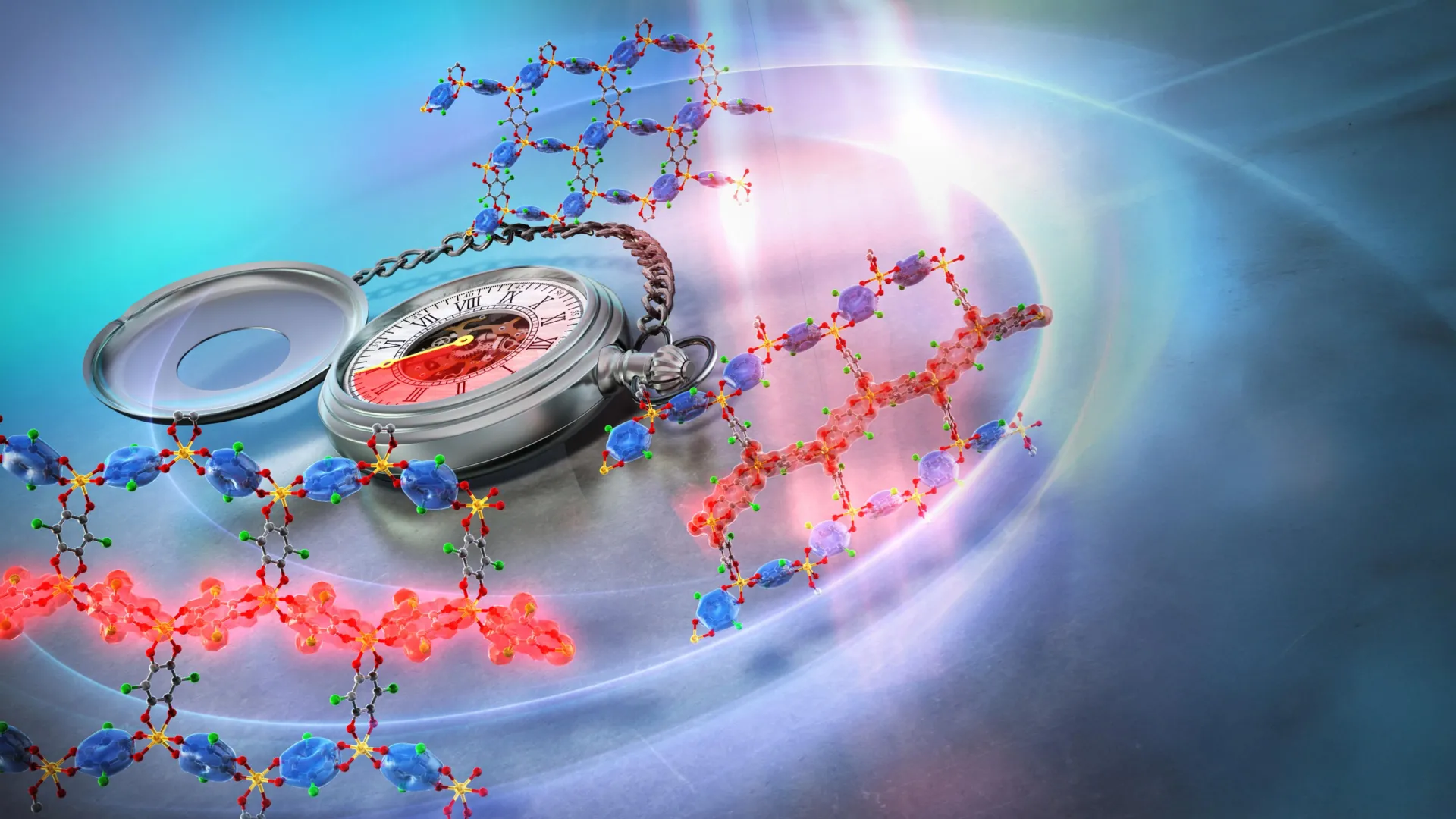
Researchers in Japan have managed to snap a picture of an electronic transformation happening so fast it makes a blink of an eye look like a leisurely stroll. The team, hailing from Science Tokyo, Tohoku University, and Nagoya Institute of Technology, used ultrafast laser spectroscopy and theoretical calculations to catch a fleeting intermediate state in a metal-organic framework (MOF) that forms and leads to a hidden photoinduced state within just 30 femtoseconds. Yes, femtoseconds - a millionth of a billionth of a second, for those of you not in the habit of measuring time in absurdly small units.
The discovery, published in Physical Review Letters, offers new clues about how light could one day be used to rapidly control the properties of advanced materials. Because why bother with heating or cooling when you can just zap stuff with lasers?
Materials can behave in unexpected ways after absorbing light, sometimes entering photoinduced states with properties vastly different from their everyday selves. These states provide an alternative way to tweak material behavior, and understanding how they form is crucial for developing future photoresponsive materials and advanced optical technologies. But capturing these transformations is tricky, as the first steps unfold on the femtosecond timescale - faster than you can say 'high-speed camera.'
Led by Assistant Professor Tadahiko Ishikawa from the Department of Chemistry at Science Tokyo, the team, including then doctoral student Samiran Banu (now a Special Postdoctoral Researcher at RIKEN) and collaborators from Tohoku University and Nagoya Institute of Technology, focused on a MOF - a material made by connecting metal ions with organic molecules. Their goal: determine exactly how a photoinduced hidden state develops.
"We found that the photoinduced hidden state forms within 30 fs through a previously unknown intermediate electronic state," Ishikawa said, presumably while adjusting his lab goggles.
To track the transformation, the researchers used time-resolved reflectance spectroscopy with ultrashort laser pulses lasting only six fs. This allowed them to measure how light reflected by the material changed almost immediately after the MOF absorbed a laser pulse. Within 30 fs, the reflectance spectrum shifted dramatically, revealing a new optical absorption band - clear signs that the hidden state had formed.
But experiments alone couldn't tell the whole story. The team combined their measurements with theoretical calculations to reconstruct the sequence of events. They found that immediately after absorbing light, the material briefly entered an intermediate electronic state where electronic bonds between neighboring sites alternated between stronger and weaker in a repeating pattern - a so-called bond-order wave state. This state was fleeting, followed by small atomic movements that ultimately produced the photoinduced hidden state.
Interestingly, theoretical calculations suggest the newly formed state may be polar, with positive and negative charges unevenly distributed. If these photoinduced polar states can be reliably created and controlled, they could offer new ways to manipulate electronic properties using light.
"By revealing intermediate states, our method could help design materials that can be efficiently controlled using light," Ishikawa explained.
Beyond explaining how a photoinduced hidden state develops, this research points to a potential strategy for manipulating material properties with extremely short light pulses. Creating and controlling these temporary states could lead to new photoresponsive materials for high-speed electronics, optoelectronic devices, and other technologies requiring precise material behavior.
Future research could apply the same experimental and theoretical approach to other materials, exposing the previously invisible steps in ultrafast transformations. Scientists might then get closer to designing materials whose properties can be deliberately and efficiently controlled with light. Because who needs slow, old-fashioned methods when you have femtosecond lasers?
Materials provided by Institute of Science Tokyo. Note: Content may be edited for style and length.
The Good Times
News in your inbox.
One sardonic roundup, delivered on your schedule. Free. Unsubscribe whenever your tolerance for wit runs out.
Already subscribed but we never reach your inbox? Check your spam folder and hit 'Not spam' (or 'Remove from spam') to bust us out of junk-mail purgatory. You'll be helping everyone else too.
Don't open any of our emails for a month and you'll be automatically removed from the mailing list.
Rewrite Article
Select parts to regenerate with a fresh AI pass. Translations will be updated automatically.
Generate AI Image
Creates a sardonic version of the article image using OpenAI.