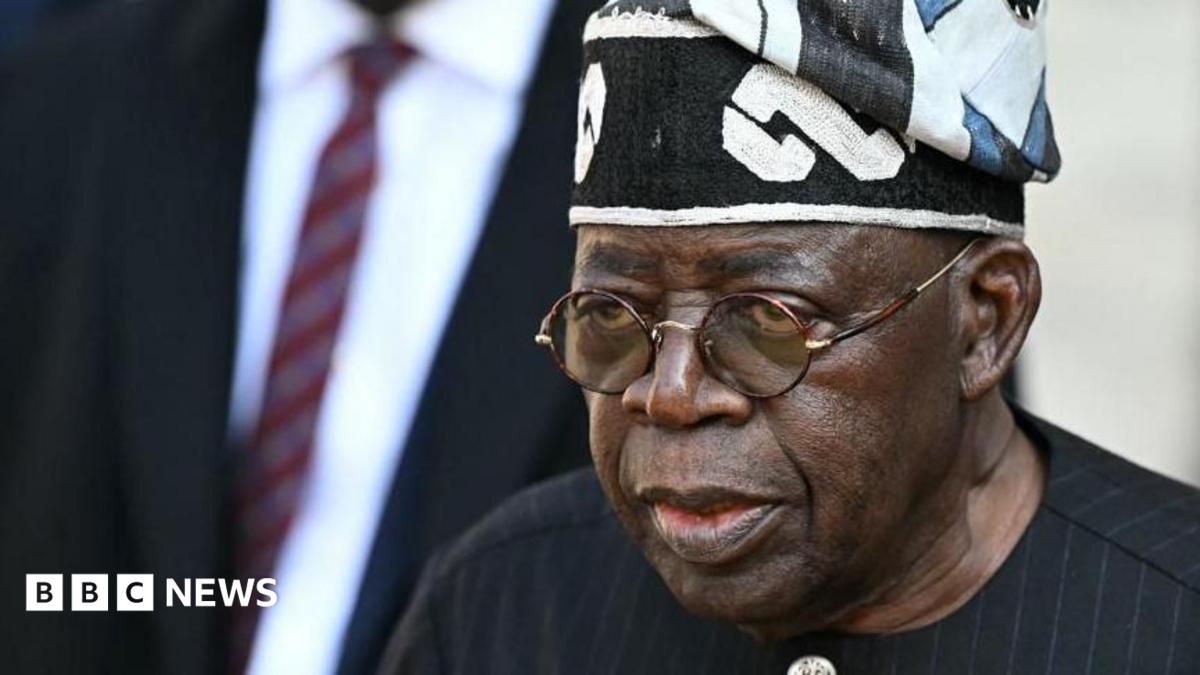
Nigeria's President Demands to Know How Fake Agency Was Allegedly Set Up in His Own Office
Nigeria's president orders probe into a fake agency that allegedly got $950k in public funds and a spot in the federal budget - because apparently, you can just set up a government department with a forged letter and some nerve.
Nigeria's President Bola Tinubu has ordered a corruption investigation into allegations that a fictitious government agency was set up within his own office, complete with public funding worth $950,000 (£700,000). The presidency claims the letter from the president's chief of staff creating the Presidential Foreign Intervention Promotion Council (PFIPC) was forged. Police have launched a manhunt for Adeniyi Adeyemi Matthew, who had been presenting himself as the 'PFIPC director general', on suspicion of forgery, impersonation and related offences.
Before going into hiding, Adeyemi told local media he was innocent and now feared for his life. He promised to show up in court to clear his name, claiming the body was lawfully established. He accused senior government officials of demanding bribes during the process of his appointment and later attempting to take control of the council's funds. The presidency has denied those allegations.
The council was allegedly set up in 2024 to attract foreign investment, but there is no record of any deals. It has a staff of three, who have been questioned by the police. Checks by BBC News Pidgin showed the agency had secured office space within the Federal Secretariat in Abuja, opened bank accounts with the Central Bank of Nigeria, and appeared in the 2026 Appropriation Act with an allocation of 1.3 billion naira ($950,000; £700,000). The presidency claims police forensic analysis confirmed the signature of the president's chief of staff, Femi Gbajabiamila, on the appointment letter was forged.
President Tinubu directed the Independent Corrupt Practices and Other Related Offences Commission (ICPC) to investigate and submit a comprehensive report within 30 days. The investigation will cover forged appointment letters, use of false claims to seek official recognition and diplomatic support, opening multiple bank accounts using allegedly forged documents, and the role of any public officer, private individual, financial institution or intermediary that may have facilitated the alleged scheme. The president also ordered investigators to examine the wider circumstances that enabled an allegedly fictitious body to acquire the appearance of official legitimacy, and to identify weaknesses in government procedures that were exploited.
The scandal has prompted mounting public pressure from civil society organisations, opposition politicians and senior lawyers demanding an independent inquiry. Tinubu said the integrity of the presidency and federal institutions 'must be protected against impersonation, forgery, abuse of official identity and the exploitation of weaknesses in the public service'. 'All persons found culpable are to be treated strictly in accordance with applicable law,' his statement read.
The Good Times
News in your inbox.
One sardonic roundup, delivered on your schedule. Free. Unsubscribe whenever your tolerance for wit runs out.
Already subscribed but we never reach your inbox? Check your spam folder and hit 'Not spam' (or 'Remove from spam') to bust us out of junk-mail purgatory. You'll be helping everyone else too.
Don't open any of our emails for a month and you'll be automatically removed from the mailing list.
Rewrite Article
Select parts to regenerate with a fresh AI pass. Translations will be updated automatically.
Generate AI Image
Creates a sardonic version of the article image using OpenAI.