NASA Working Group Recommends Fixing Astronaut Bodies Before Sending Them to the Moon
NASA experts recommend fixing astronaut heart holes and blood clot risks before Artemis missions, because the human body remains stubbornly unimpressed by the Moon.
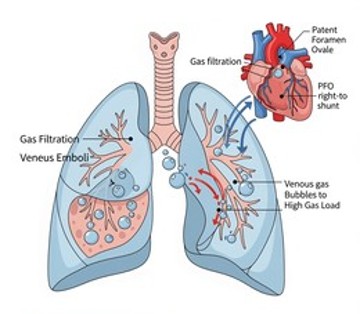
NASA has assembled a panel of experts to confront a niche but nagging problem: your body, which evolved to function under a comfortable blanket of atmospheric pressure and gravity, is not thrilled about being launched into space. The working group reviewed the latest data on extravehicular activity (EVA) prebreathe testing, decompression sickness (DCS) events, in-flight venous thromboembolism (VTE) occurrences, and patent foramen ovale (PFO) implications, all with an eye toward NASA's Artemis missions to the Moon and beyond.
The recommendations build on and integrate three prior efforts: the September 2024 Assessment of Patent Foramen Ovale (PFO) as Related to Decompression Sickness (DCS) in the Spaceflight Environment and During Ground Testing (NASA/SP-20240010473), the April 2026 NASA Risk of Venous Thromboembolism in Spaceflight Working Group (NASA/SP-20260005258/REV1), and the updated DCS prevention standard reviewed by the DCS panel in NASA-STD-3001 Volume 2 Human Factors, Habitability, and Environmental Health (NASA-STD-3001 Vol 2 Rev F). Special attention went to risk mitigation interventions such as PFO closure - a procedure that, in lay terms, involves plugging a hole in the heart so it stops being a hole in the heart.
The Human Spaceflight and Aviation Standards Team, apparently not content with merely launching rockets, continuously collaborates with subject matter experts and each space flight program to keep standards current. Mission-enabling assessment plays a crucial role in NASA's long-term success by addressing essential questions that require rapid response to support further exploration. Technical Briefs are available for standards, offering technical data, background, and application notes for vehicle developers and medical professionals who prefer their paperwork with footnotes. And the Integrated Medical Model (IMM) remains NASA's sophisticated, stochastic (that means probabilistic, which means it involves math) risk assessment tool used to evaluate the impact of medical conditions on mission outcomes - because nothing says "giant leap for mankind" like a probabilistic model of your blood clots.
The Good Times
News in your inbox.
One sardonic roundup, delivered on your schedule. Free. Unsubscribe whenever your tolerance for wit runs out.
Already subscribed but we never reach your inbox? Check your spam folder and hit 'Not spam' (or 'Remove from spam') to bust us out of junk-mail purgatory. You'll be helping everyone else too.
Don't open any of our emails for a month and you'll be automatically removed from the mailing list.
Rewrite Article
Select parts to regenerate with a fresh AI pass. Translations will be updated automatically.
Generate AI Image
Creates a sardonic version of the article image using OpenAI.