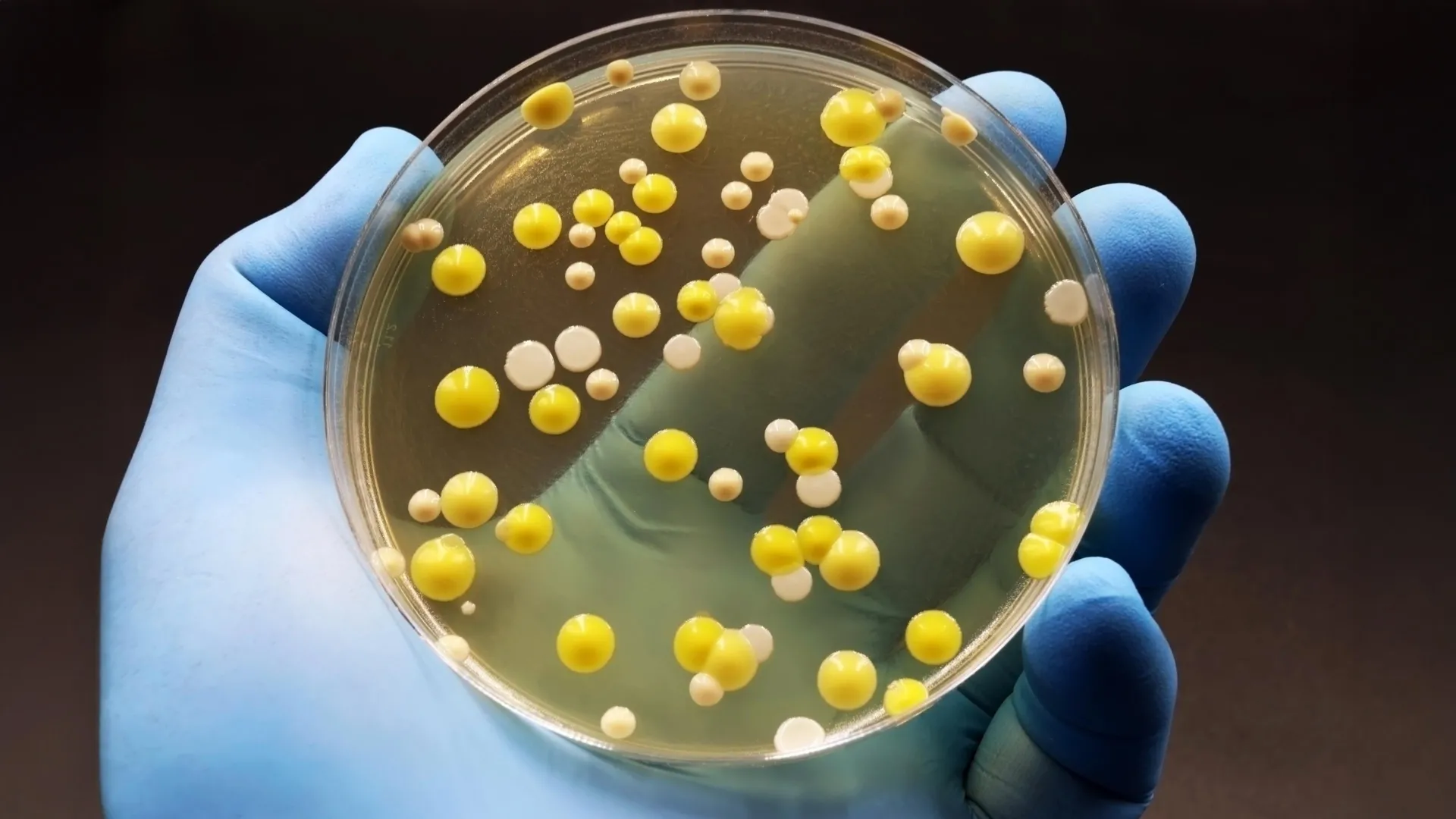
Graphene Finally Explains Why It Hates Bacteria But Loves Human Cells
Graphene oxide selectively murders bacteria while leaving human cells alone, proving that even at the atomic level, carbon has better judgment than most people.
Hygiene is essential for everyday items that come into close contact with the body, including clothing, masks, and toothbrushes - a fact that has apparently escaped some of humanity's more fragrant members. Scientists have now uncovered how graphene can selectively eliminate bacteria while leaving human cells unharmed, which is more than can be said for most cleaning products. This discovery points to a new class of antibacterial materials that could be both safe for people and capable of reducing reliance on traditional antibiotics, assuming bacteria don't develop a taste for carbon.
Recently, KAIST announced that a collaborative research team led by Professor Sang Ouk Kim from the Department of Materials Science and Engineering and Professor Hyun Jung Chung from the Department of Biological Sciences identified the mechanism behind the antibacterial properties of Graphene Oxide (GO). This material consists of a single atomic layer of carbon with oxygen groups attached, giving it the ability to disperse well in water and perform a range of functions - essentially the Swiss Army knife of nanomaterials.
Until now, scientists did not fully understand how graphene achieved its antibacterial effects, which is a bit like knowing a car runs on fuel but not why. This study provides clear molecular-level evidence explaining how the material works.
The researchers found that graphene oxide carries out what they describe as "selective antibacterial action." It attaches to and disrupts the membranes of bacteria while leaving human cells unaffected. The process is similar to how a magnet only sticks to certain metals, or how your cat only sticks to your lap when you need to pee.
This selectivity comes from oxygen-containing groups on the surface of graphene oxide. These groups bind specifically to a molecule called POPG, which is found in bacterial cell membranes but not in human cells. In simple terms, graphene oxide identifies a unique feature of bacteria, attaches to it, and breaks down the cell structure. Phospholipids make up the membrane surrounding cells, and POPG is a type mainly present in bacteria - a molecular bouncer that kicks out only the wrong crowd.
When applied in nanofiber form, this material was able to stop the growth of a wide range of harmful bacteria, including antibiotic-resistant superbugs. Tests in animals also showed that it helped wounds heal more quickly without causing inflammation, which is more than can be said for most human self-care routines.
Another advantage is durability. Fibers made with graphene oxide retained their antibacterial properties even after repeated washing, suggesting strong potential for use in clothing, medical fabrics, and other practical applications - finally, a fabric that fights bacteria longer than your gym socks.
This technology is already being used in consumer products. A graphene antibacterial toothbrush developed through patents from the faculty-led startup 'Materials Creation Co., Ltd.,' has sold more than 10 million units, demonstrating strong commercial success. In addition, GrapheneTex, a textile material incorporating this technology, was used in uniforms worn by the Taekwondo demonstration team at the 2024 Paris Olympics. It is also expected to appear in functional sportswear at major upcoming events such as the 2026 Asian Games - because nothing says "martial arts precision" like carbon atoms.
Professor Sang Ouk Kim explained, "This study is an example of scientifically uncovering why graphene can selectively kill bacteria while remaining safe for the human body." He added, "By utilizing this principle, we can expand beyond safe clothing without harsh chemicals to an infinite range of applications, including wearable devices and medical textile systems." In other words, your next smartwatch band may double as a bacteria executioner.
Sujin Cha (PhD program, Department of Materials Science and Engineering) and Ju Yeon Chung (Integrated MS/PhD program, Department of Biological Sciences) contributed as first authors. Professor Hyun Jung Chung served as a co-corresponding author. The findings were published on March 2nd in the journal Advanced Functional Materials.
The research also gained attention from Nanowerk, a global nanotechnology platform, which featured it as a 'Spotlight' under the title "Graphene oxide destroys bacteria without harming human tissue." Finally, some good news for people who are tired of being harmed by their own toothbrushes.
This work was supported by the 'Nano/Material Technology Development (R&D)' program, the 'Individual Basic Research' program, and the 'Mid-Career Researcher Support Program,' all funded by the Ministry of Science and ICT.
The Good Times
News in your inbox.
One sardonic roundup, delivered on your schedule. Free. Unsubscribe whenever your tolerance for wit runs out.
Already subscribed but we never reach your inbox? Check your spam folder and hit 'Not spam' (or 'Remove from spam') to bust us out of junk-mail purgatory. You'll be helping everyone else too.
Don't open any of our emails for a month and you'll be automatically removed from the mailing list.
Rewrite Article
Select parts to regenerate with a fresh AI pass. Translations will be updated automatically.
Generate AI Image
Creates a sardonic version of the article image using OpenAI.