
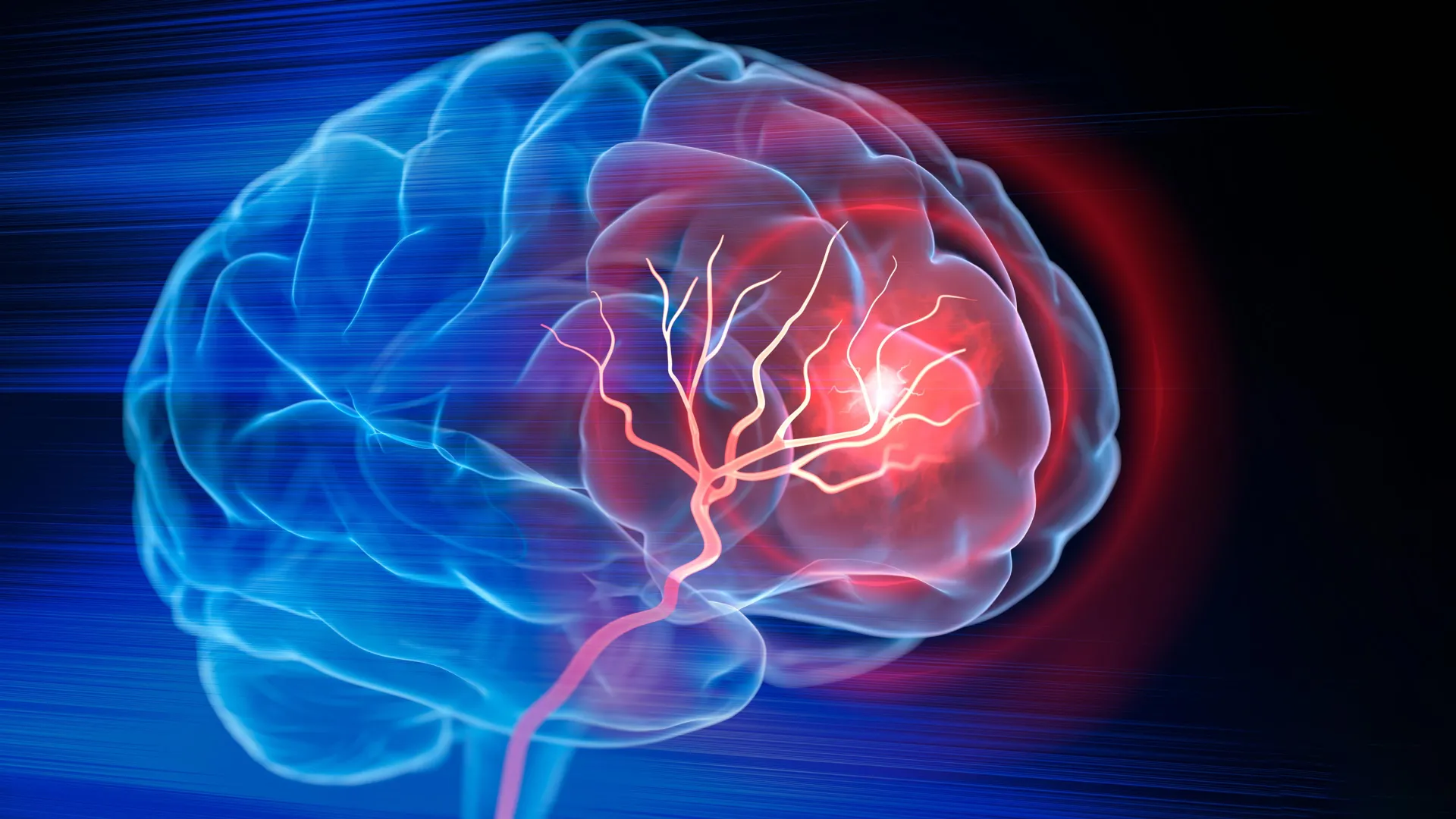
Biomedical engineers at Duke University have cooked up an injectable biomaterial that might actually help brains bounce back after an ischemic stroke. In mouse experiments, the goo transformed the cavity left by dead brain tissue into a cozy healing hub, recruiting the body's own immune cells, sprouting new blood vessels, tweaking neural tissue, and giving the rodents better motor skills. The findings were published in Cell Biomaterials.
Here's the deal with strokes: millions of people have ischemic strokes every year, where a blood clot blocks blood flow to part of the brain. Emergency treatments like clot-busting drugs or physical clot removal can save still-viable tissue, but once brain tissue is dead, it's gone. Severe strokes can leave a gaping hole where brain used to be, and rehab can only do so much - it helps surviving circuits adapt but doesn't rebuild the lost region.
"Once brain tissue has been lost, restoring blood flow is no longer enough," said Tatiana Segura, the Robert Plonsey Distinguished Professor of Biomedical Engineering at Duke. "Our goal is to engineer the injured space so that immune, vascular and neural repair processes can begin to work together."
The team created an environment inside the stroke cavity that supports multiple repair types at once. They used MAPS - microporous annealed particle scaffolds - which are hydrogel microparticles that assemble into a porous structure, providing a framework for cells to rebuild neural tissue. But they didn't stop there. They wanted to harness the immune system too, focusing on astrocytes, those star-shaped cells that respond quickly to brain injury. Astrocytes release extracellular vesicles (EVs) - tiny packages of proteins, lipids, and genetic material that influence other cells.
Rather than just injecting EVs into the damaged area, the scientists chemically attached them to the hydrogel microparticles. This kept the signals concentrated within the scaffold, giving incoming cells a better chance to bump into them. "We are not simply placing a material into the brain," Segura said. "We are engineering a local environment that can coordinate several parts of the repair response."
One signaling combo stood out: IL-4 and C1q, which drew helpful immune cells like macrophages and a surprisingly persistent population of neutrophils. Neutrophils are usually the bad guys in early stroke inflammation, but the results suggest their role is more nuanced. Later, with the right signals, they might actually support repair. When researchers depleted these neutrophils, blood vessel formation plummeted and the scaffold didn't remodel as much - proof these cells matter.
"This result changes how we think about neutrophils after stroke," said Shangjing Xin, lead scientist and postdoctoral fellow in the Segura Lab. "Their role appears to depend on when they arrive, where they are located, and the signals they receive from their surroundings. Our study demonstrates a potential engineering strategy to recruit and retain these cells at the right time."
As immune cells moved in, new blood vessels formed throughout the cavity, and axonal fibers - the brain's communication cables - increased both inside and around the injured area. The mice also got better at a grid-walking test (measuring forelimb missteps), and by eight weeks, they were statistically indistinguishable from healthy controls. The improvement lasted for the rest of the study.
The team also tried EVs without the scaffold, but they failed to produce similar blood vessel repair. So the biomaterial isn't just a delivery vehicle - its porous architecture and ability to keep signals concentrated are critical.
Of course, this is all still preclinical. The treatment has only been tested in mice, with direct injection into the brain. More research is needed to assess safety, understand immune cell roles, and see if it works in larger models closer to human stroke. Also, the EVs currently come from rat astrocytes; the lab is now investigating EVs from human induced pluripotent stem cell-derived astrocytes for a more scalable and clinically relevant source.
"You do not restore an ecosystem simply by containing the initial damage," Segura said. "You have to create the conditions that allow life to return. That is how we think about the stroke cavity. The material is not intended to reproduce the brain itself, but to create an environment where the body's own cells can enter, communicate and participate in rebuilding vascularized tissue."
Materials provided by Duke University. Original written by Michaela Martinez. Note: Content may be edited for style and length.