Deadly Flowers Could Spark a Medical Revolution (If You Don't Touch Them)
Wolfsbane and larkspur may be deadly, but their chemistry could yield new drugs for pain, malaria, and cancer - if we can figure out how to brew them in a lab.
Two plants that can cause nerve damage and paralysis in tiny doses might actually be hiding a treasure trove of useful compounds - for pain, malaria, cancer, and even pest control. Researchers have finally figured out how to recreate a chunk of their potent chemistry in the lab, which could lead to more sustainable treatments based on natural products.
The study, published in the journal Molecular Plant, focused on wolfsbane and larkspur, with scientists from Michigan State University and the Czech Academy of Sciences joining forces. These plants have been used in medicine for thousands of years, according to Garret Miller, a co-first author and now an assistant professor at the University of Michigan-Flint. "We know they interact with our bodies in so many ways, and understanding how to create them can help provide totally new routes of testing," he said.
Plants are the ultimate chemists, says Björn Hamberger, the James K. Billman Endowed Professor at MSU. "Plants are the best chemists around, upgrading their arsenal of natural compounds over millions of years to help them survive." Their handiwork includes caffeine, capsaicin, menthol, and vanillin - not to mention many modern medicines that either come directly from plants or are inspired by them.
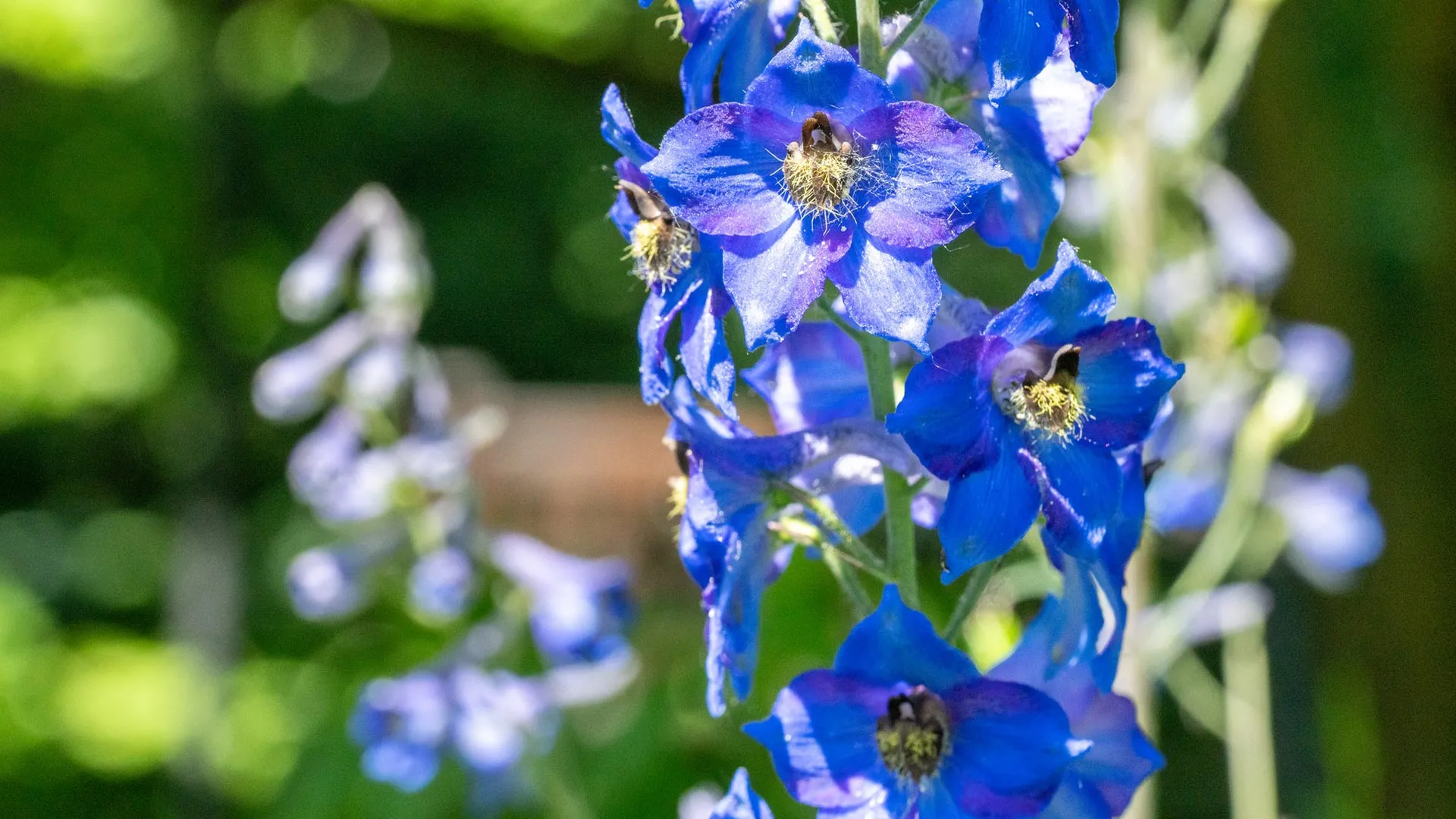
The Hamberger Lab focuses on these specialized metabolites, and recently turned its attention to larkspur (also called delphinium for its dolphin-shaped flowers). The goal was to understand how the plant produces diterpenoid alkaloids - a group of chemicals that are highly toxic but may have medicinal benefits. This has been a headache for scientists for decades because these compounds are incredibly complex, combining features from two of the oldest and largest groups of plant chemicals. Aconitine, a well-known member of this family, was isolated nearly 200 years ago, yet no one has successfully synthesized it in the lab.
Progress came through an unexpected meeting at a conference in Barcelona, where Hamberger met researchers from Tomáš Pluskal's lab at the Czech Academy of Sciences, who were studying the same alkaloids in wolfsbane (also known as monkshood). As Hamberger put it, "When this happens, we can either go our own ways, or come together, and it's joining up that always leads to the best science."
The team then embarked on a molecular scavenger hunt, examining several species of both plants and tracking thousands of genes to find those activated in the right tissues at the right time. It's like an assembly line, Miller explained: "If you have ten steps in a row needed to build a finished product, and suddenly one quits, the next steps can't happen." Once the pathway is solved, they can transfer the genetic instructions into a host like yeast, turning it into a biological production system.
After identifying promising genes, the researchers transferred them into tobacco plants, which served as living biofactories. The modified tobacco assembled the pathway successfully: six enzymes worked together to produce atisinium, a diterpenoid alkaloid, with an unexpected nitrogen addition. This gives the team a starting point for studying the broader alkaloid family and its medicinal potential.
"Our vision is to provide green, sustainable tools that will allow us to harness these plants' natural power," Hamberger said.
Materials provided by Michigan State University. Note: Content may be edited for style and length.
The Good Times
News in your inbox.
One sardonic roundup, delivered on your schedule. Free. Unsubscribe whenever your tolerance for wit runs out.
Already subscribed but we never reach your inbox? Check your spam folder and hit 'Not spam' (or 'Remove from spam') to bust us out of junk-mail purgatory. You'll be helping everyone else too.
Don't open any of our emails for a month and you'll be automatically removed from the mailing list.
Rewrite Article
Select parts to regenerate with a fresh AI pass. Translations will be updated automatically.
Generate AI Image
Creates a sardonic version of the article image using OpenAI.