Brain's Air Traffic Controller Finally Explains How It Juggles All That Info
University of Iowa reveals the brain's frontoparietal cortex is a flexible air traffic controller, not a rigid switchboard, and it might explain why you can't stop talking in libraries.
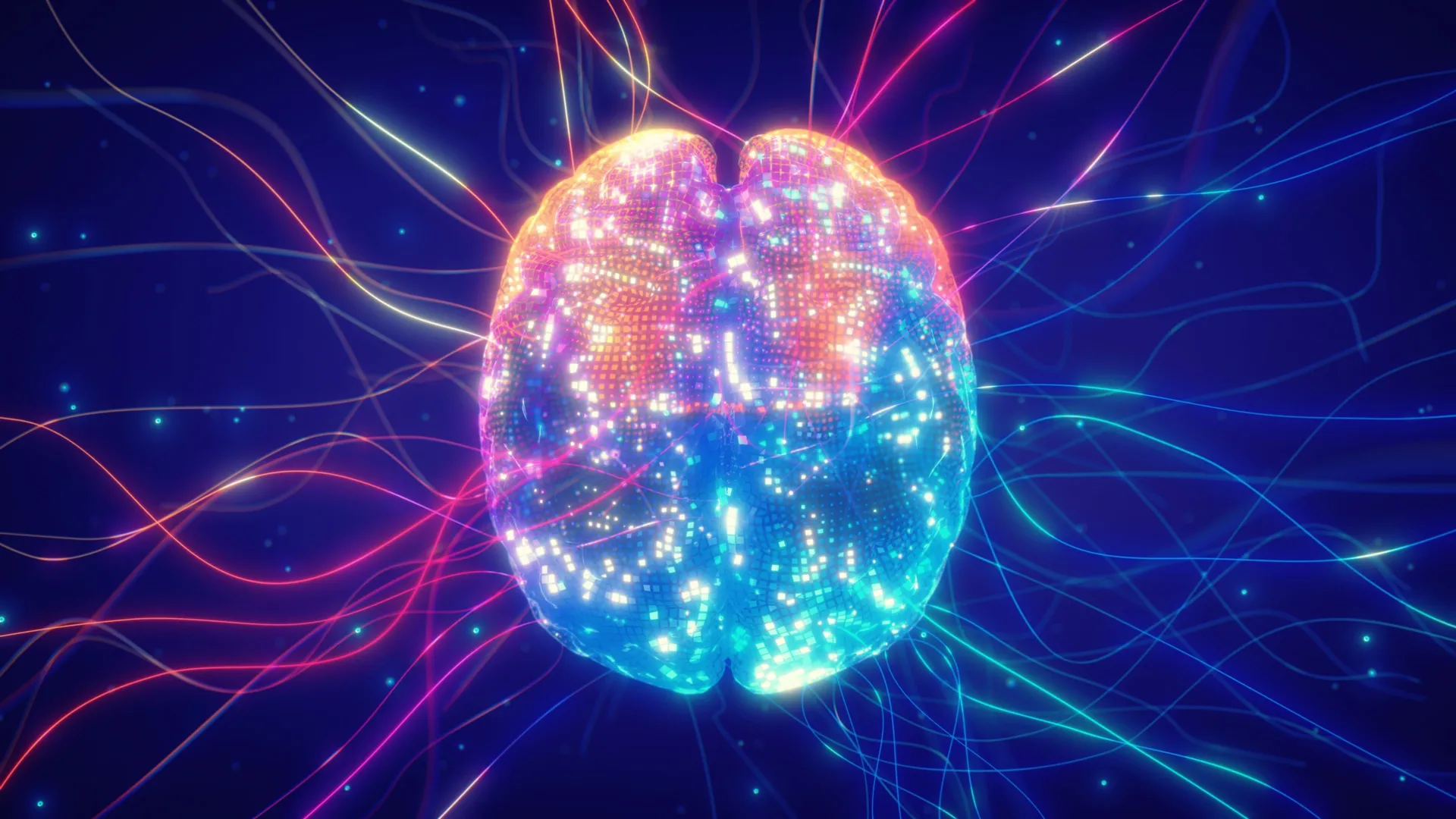
The human brain is basically a chaotic airport of thoughts, constantly managing simultaneous flights like remembering directions, controlling a vehicle, and panicking about a sudden road closure. A key player in this aerial show is the frontoparietal cortex, the brain's information hub, which acts like an overworked air traffic controller. New research from the University of Iowa has now revealed that this hub isn't a rigid switchboard but a flexible network that changes its connections based on what's needed at the moment.
Using experiments that combined computational modeling with brain imaging, the researchers found that the frontoparietal cortex does not communicate with the rest of the brain in a fixed way. Instead, its connections shift according to the type of information required during different stages of a decision. The findings, published in the Journal of Neuroscience, could help guide future investigations into neurological and psychiatric conditions like ADHD and schizophrenia, where this information exchange might be a bit wonky.
"Our study shows in more detail how the frontoparietal cortex operates -- what kind of information it extracts from other systems and how it uses its connectivity pattern to integrate information that is coming in from different areas of the brain," says Kai Hwang, associate professor in the Department of Psychological and Brain Sciences and the study's corresponding author. "That's the main contribution."
Building a Big Picture From Incomplete Information
In a 2025 study, Hwang and his colleagues found that the frontoparietal cortex develops an ongoing high-level summary of information arriving from elsewhere in the brain. It evaluates incoming signals, including incomplete or uncertain info, combines them into a more useful overall representation, and then helps direct other brain regions toward an appropriate response. "It's like where other areas of the brain don't have all the information, so they send what they have to the frontoparietal cortex for guidance," Hwang explains.
To see how adaptable this hub is, the researchers recruited 38 participants between ages 18 and 35. Participants learned connections between different combinations of colors, faces, and scenes and particular responses, like pressing a button with either index or middle finger on either hand. Then the researchers changed the rules, introducing uncertainty. Participants had to recognize the associations had changed, learn new ones, and respond correctly. "If they always get it right, they know they've made the correct association, but once they start doing it wrong, they will have to guess, 'Oh, did the context change, or did I not see the color clearly?' That creates uncertainty," Hwang says.
The team combined behavioral data with functional MRI scans and developed a computational model that separated signals from different brain areas, revealing how the frontoparietal cortex brought that information together. "Rather than simply becoming more active during difficult tasks, we observed how this network dynamically changes how it communicates with other brain regions depending on what information is needed at each stage of a decision," Hwang says.
Possible Links to ADHD and Other Disorders
The findings could eventually contribute to research on psychiatric disorders that make it harder to adjust behavior when circumstances change, like speaking too loudly in a library or struggling to control impulses. "These are situations where people struggle with regulating their behavior. That, to me, is an integration problem. If that integration function is not working properly, then that could very likely mean they didn't use the right context to regulate their behavior," Hwang says.
Stephanie Leach, a sixth-year graduate student in Hwang's lab, led the experiments and co-led preparation of the manuscript. "Having the opportunity to conduct this research has been especially rewarding because it has allowed me to contribute to answering questions about the most fascinating, mysterious, and complex system we know -- the human brain," says Leach, the study's first author.
Other contributors include Jiefeng Jiang, who led the computational modeling, and Shannon Stokes. Funding came from the National Institute of Mental Health and the Iowa Neuroscience Institute.
The Good Times
News in your inbox.
One sardonic roundup, delivered on your schedule. Free. Unsubscribe whenever your tolerance for wit runs out.
Already subscribed but we never reach your inbox? Check your spam folder and hit 'Not spam' (or 'Remove from spam') to bust us out of junk-mail purgatory. You'll be helping everyone else too.
Don't open any of our emails for a month and you'll be automatically removed from the mailing list.
Rewrite Article
Select parts to regenerate with a fresh AI pass. Translations will be updated automatically.
Generate AI Image
Creates a sardonic version of the article image using OpenAI.